Showing posts with label Organic Manifesto. Show all posts

Thursday, December 8, 2011

Making Organic More Affordable

USDA Certified Organic

  Since Sabrina's Crossing debuted last September, I have tried to share the information I have come across, and find important, about the state of the American food supply.

  Because of the presence of GMOs, pesticides, anti-biotics, hormones, chemicals, and so on, our food supply has come to resemble something of a disaster. In attempt to avoid as many of these harmful things listed above, I buy organic food whenever possible. But you know what -- it's expensive, isn't it?!

  (side note: this isn't intended to be a 'why you should eat organic' blog. I've already done those: Do You Know What GMOs Are?, The Effects of GMOs, The Harmful Effects of Soy, What Can We Do About GMOs?)

Money Spent on Food versus Health Care 
  Here is something to chew on as you think about the importance of the quality of our food: in the 1960s, 18% of our yearly income was spent on food, while only 5% was spent on health care. Today we spend 9% on food, and 17% on health care. Staggering numbers if you ask me.

  Why the drastic change? Food today is different than the food our parents, or grandparents, grew up on. We have to change our ways to reflect the changes that have been made in our food supply. 99% of the 80,000 toxic chemicals in circulation didn't exist before 1950.

  We cannot compare our diets to those from prior generations. Food in the 1950s didn't have meat and dairy filled with hormones and anti-biotics. Fruits didn't have multiple pesticides on them, and there were no GMOs. 

Somewhere along the line, we were conditioned to think that food should be cheap.
  The cheaper it is, the better. $1 for a cheeseburger? Awesome, right? Cheap food/fast food is essentially processed garbage.

  Let's look at it this way: would you rather pay a few extra dollars for high-quality food now? Or pay even more a little further down the line in the form of visits to the doctor and medication?
 
  As sad as it is, healthier food costs more money in the US. Outside of immediate policy change (such as eliminating government subsidies for genetically modified crops/farms, and replacing them with subsidizing organic farms), healthier food will continue to be more costly at the market (or until the consumer makes the demand). There's no way around it.

High pesticide versus low pesticide produce.
  $2 for a pound of organic apples, or 70 cents per pound for non-organic apples? I understand it's a significant amount, and it adds up over time. But all things considered, I think the extra cost is worth it! After all, it's our health we are talking about.

  If eating healthier foods is a priority for you, hopefully today's blog will give you a few ideas on how to scrape up a few extra dollars for those all-important groceries!

Prioritize: the Dirty Dozen & the Clean 15  
  The first thing you can do is prioritize what you buy as organic.

  Always avoid the 'dirty dozen' (thin skinned fruits & vegetables: Apples, Celery, Peaches, Strawberries, Domestic blueberries, Nectarines, Sweet bell peppers. Spinach, kale and collard greens, Cherries, Potatoes, Imported grapes, and Lettuce). Those things should ALWAYS be bought organically because of the high amount of pesticides and toxins found on them.

  The 'Clean 15' are fruits and vegetables with thick rinds/skins that don't necessarily need to be bought organically (Onions, Avocados, Sweet corn, Pineapples, Mango, Sweet peas, Asparagus, Kiwi fruit, Cabbage, Eggplant, Cantaloupe, Watermelon, Grapefruit, Sweet potatoes, and Sweet onions).

Re-think Our Budgets 
  The second thing we can do is re-prioritize our budgets:
        -Stop buying magazines, and read your 'news' online.
        -Stop buying $4 lattes three times a week (this one's tough, I know!). Brew your coffee at home!
        -Stop buying pop/soda (whatever you call it in your neck of the woods!) and bottled water!
        -Cut down the number of times you eat out per week. Restaurants are expensive!
        -Buy frozen fruits and veggies (these can actually be more nutritious because the foods aren't oxidizing/aging, and thus losing nutrients).
        -You don't need to eat meat every day! Limit the amount of meat you eat, so the meat you do consume is organic.

  What other ways can we change our spending habits?

Buy Local
  Thirdly, buy fruits and vegetables that are in season (also known as buying local!). It costs a great deal of money to ship foods across the country, and even more from South America, so those shipping costs are passed onto the consumer. By buying local, those shipping costs are taken out of the equation.
CSAs & Gardens
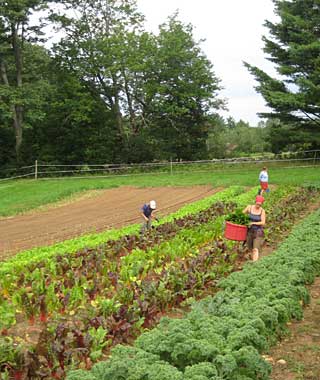
  Obviously you can grow your own vegetables. I understand that takes significant effort, but it's an option.

  You can also go to your local farmers' market or join a CSA (Community Supported Agriculture - which I will be doing a blog on in the future). To locate CSAs and farmer's markets in your area, go to: www.localharvest.org.

Compare
  Lastly, compare prices! Don't just go to Whole Foods and buy up all the organic produce you can find.

  Compare which stores have the cheapest apples, or the best deals on your favorite foods. Trader Joe's is an awesome option, and lots of times the 'big box' stores (Safeway, etc) have various organics on sale. We just have to be diligent and pay more attention!

  For those of you that say that organic food is too expensive, try re-prioritizing your budgets for a while, and see how it works out! As you can see, there are A LOT of things we can do, we just have to make it a priority!
LINKS:


Thursday, November 3, 2011

GMOs - What Can We Do?


  Here we are...back to GMOs! You didn't think I was done calling-out the American food supply, did you?

  First I told you what GMOs were. Then I told you how they negatively effect our health, and our environment.

  So now, what can we do to identify them in the grocery store and more importantly, avoid them?

GMOs & Their Effects
  But first here's a QUICK recap: GMOs are Genetically Modified Organisms. They are organisms (seeds, plants, animals) whose genetic material has been altered from its natural state. DNA molecules are combined with different sources to create a new set of genes, and essentially a new organism.

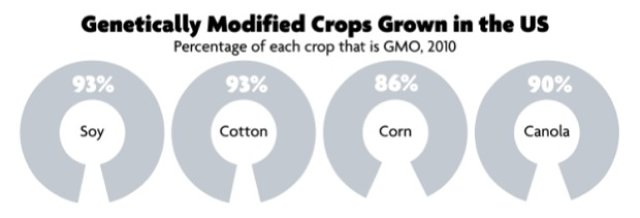
  The US food supply is full of GMOs, but they are most prevalent in corn and soy crops. Unfortunately for us, corn and soy is found in virtually everything these days!

  And while the effects on our health (rise in infertility, obesity, Diabetes, Autism, Parkinson's, asthma, cancer, etc rates) cannot yet be directly linked to GMOs, they haven't been proven safe either.
 
  In 2009, the American Academy of Environmental Medicine publicly condemned GMOs in our food supply. Saying GMOs posed 'a serious health risk.' They also asked the U.S. government to implement an immediate moratorium on all GMO foods, and urged physicians to prescribe non-GMO diets.

GMOs have infiltrated our food supply!
  Personally speaking, I'm not going to wait for the government to tell me they're unsafe. The long term consequences of GMOs on our health and environment have NOT been adequately researched. Since learning how potentially harmful GMOs are to our health and environment, I quickly became determined to avoid them at all costs. So what do we look for?

How Do We Identify Genetically Modified Foods?
  Since GMO foods are not labeled in the US (like they are required to be in over 40 countries worldwide), identifying them can be somewhat difficult. But it's not impossible. All it takes is a little diligence on the part of the consumer!

Non-GMO Project seal.
  Keep in mind that roughly 80% of packaged foods in the U.S. contain GMO ingredients.

  First and foremost, when buying processed/packaged goods, look for the Non-GMO Project verified seal. Products with this seal have undergone independent third-party testing to ensure they have been made to best avoid GMO ingredients. So this is a helpful tool.

  The second thing you must do when buying processed foods is look at the ingredients list! Avoid at-risk ingredients (the big 4): corn, soybean, canola, and cottonseed products. Okay, this is nearly impossible, so let's move onto step three.

Pick & Choose When to Buy Organic -- the Dirty Dozen & Clean 15
  When buying fruits and vegetables it's a whole different ballgame. Federal researchers found that certain types of organic produce can reduce the amount of toxins we consume on a daily basis by as much as 80%!

  The "Dirty Dozen" is a list of produce that contain the highest amount of chemicals, and should ALWAYS be bought organically.

  When 'conventionally' grown (non-organic, with chemicals), these fruits and vegetables tested positive for at least 47 different chemicals, with some testing positive for as many as 67. Those numbers are frightening if you ask me!

  Do we really want those pesticides in our bodies? Here are the Dirty Dozen: Apples, Celery, Peaches, Strawberries, Domestic blueberries, Nectarines, Sweet bell peppers. Spinach, Kale and Collard greens, Cherries, Potatoes, Imported grapes, and Lettuce.

  I know buying Organic produce can get expensive. So there's also a "Clean 15" that lists fruits and vegetables that have little to no traces of pesticides when grown 'conventionally' (non-organically).

  The Clean 15 are: Onions, Avocados, Sweet corn, Pineapples, Mango, Sweet peas, Asparagus, Kiwi fruit, Cabbage, Eggplant, Cantaloupe, Watermelon, Grapefruit, Sweet potatoes, and Sweet onions.

   By keeping these two lists in mind, you can avoid a great deal of harmful and unnecessary chemicals! In my opinion, it's best to have a "No Chemical Policy." Since when is it okay to consume chemicals?

Just Label It!
Demand GMOs Be Labeled  
  The last thing we, as consumers can do, is continue to push our government to label GMO foods. We need to make these harmful foods more-easily identifiable in the grocery store!

  As I mentioned before, over 40 countries worldwide label modified foods, so why is the US so far behind?

  The Center for Food Safety recently started the Just Label It campaign. The CFS has petitioned the FDA demanding it require the labeling of modified foods. Go sign it! This link will send your comment/request to the FDA and President Obama.

  While it may be difficult, and somewhat time-consuming, I encourage you to be diligent on your own, and pay attention to what is in your food! A chemical is never a good thing to put in our bodies.

  After all, we only get one of them! Be mindful of how we are treating it!


  RELATED POSTS:

 LINKS:

Tuesday, September 20, 2011

Do You Know What GMOs Are?

 
  You may or may not have heard about them. But GMOs have become quite the hot topic over the past couple of years in regard to the food supply in the US.

  In short, GMOs are Genetically Modified Organisms. Great, so what does that mean?

  It's an organism (seed, plant, animal, you get the idea) whose genetic material has been altered from its natural state.

  It's combining DNA molecules from different sources to create a new set of genes, and essentially a new organism. It's playing God with the genetics of plants and animals. Does that sound like something that should be going on with our food?

Round-Up Ready Seeds
  The most commonly seen GMOs come in the form of agricultural crops. In the mid-1990s, a company called Monsanto first patented corn seeds and soy beans to withstand the affects of herbicides and pesticides. Essentially, they put herbicide and pesticide into the seeds. They call them 'Round-Up Ready' seeds.

  In theory, it sounds like a great idea. Why not make farmers' lives easier by helping them create a farm that doesn't need to be weeded? But here's the reality: not only is our food covered in chemicals, but now chemicals are inside our food.

  Today, 15-20 years after they were first introduced, it is becoming more and more clear that GMOs have become a very harmful monster in our world. Bringing these chemicals into our food supply has had repercussions that we never expected. The effects have harmed our health, our environment, our land, and ocean life.

  I'll dive deeper into these effects a later post.

Avoiding GMOs is a Difficult Task
  You might think: okay, so just avoid corn and soy, and there's no problem. Wrong. Unfortunately GMO corn and soy are in EVERYTHING.

  Everything that is processed, that is. Look on the ingredients on any box you pick up in the store, and I can almost guarantee that either corn or soy is listed.

Altering Animals

  A genetically modified animal is just as problematic. Everyone wants a bigger, fatter cow, right?!? So lets make that cow (or chicken, pig, etc) grow that much bigger/faster by giving them hormones.

  When it grows too quickly, or becomes too heavy for its bones (that weren't meant to support the modified, larger-version), the cow gets sick. So to prevent it from becoming sick, farm animals are given anti-biotics. Those anti-biotics (don't forget about the hormones too) are then ingested by the human that eats that farm animal.

  Now can't you see how dangerous GMOs might be?  I'm going to write more and more about GMOs, their ramifications, what we can do, and how we can avoid them in the near future.

What Foods Have GMOs in Them?
  Here are the most prevalent offenders:

       -milk (dairy products)
       -cooking oils (corn, soybean, cottonseed, and canola oils produced in North America)
       -animal products
       -sugar & artificial sweeteners
       -cereals
       -fruits & vegetables
       -crackers & chips

  Like I said, GMOs are EVERYWHERE! The only way to ensure that you're not consuming a GMO food, is to find organic alternatives.

  I'm not writing this to scare anyone, I just want to share the information I've come across in the last six months. It's made a great impact on me, and it has changed the way I eat and live my life (for the better, I believe).

  I find the whole process to be very interesting (and disturbing), and I think it is affecting us more than we know.

  Hope you'll stay tuned!


LINKS:
Rodale
Jillian Michaels Podcast - 3/25/2011 & 4/29/2011
Organic Manifesto
6 GMO Foods to Avoid