Showing posts with label Dangers of Soy. Show all posts

Tuesday, August 14, 2012

GMO Labeling and California's Proposition 37

Just Label It Campaign

  It's been a while since we talked about GMOs. And unfortunately, not much has changed in the past few months in regard to the prevalence, production, crops, or labeling of genetically modified foods in the US.

  But that could be changing, come November.

Proposition 37
  This election season, Californians will be voting on a mandatory labeling referendum of genetically engineered foods: Proposition 37. If passed, it would mean that genetically engineered foods, and food products, must be labeled in California.

  My question has always been this: why are the US (and Canada) the ONLY (wealthy) countries with ZERO regulations and labeling laws regarding GMOs?

  Since GMOs were never tested prior to entering the food supply, North Americans have essentially been the guinea pigs in an enormous experiment running 16 years strong. And unfortunately, we've seen a huge decline, across the board, in our health since the introduction of GMOs: chronic disease rates have nearly doubled. And food allergies, Autism, Diabetes, asthma, obesity, Parkinson's, cancer and infertility rates have exploded.

  But now that we are becoming more and more aware of GMOs, and what they are potentially doing to our health, it still remains nearly impossible to identify them, and thus, avoid them if you're in North America.

  A simple label would rectify that. Having a label, like the one found all over the world (50 other countries either require labels for GM foods, or ban them all together), would allow the consumer to make educated choices at the grocery store. No more guessing. No more blind faith in the food system.

  Imagine that. We'd know exactly what was in the food we were buying, and feeding to our kids. 

Why is California so important?
  It is believed that once one state passes a GMO labeling law, a precedent will have been set, and more states will be able to follow suit.

  And even though 90% of Americans believe GMOs should be labeled, politicians have repeatedly failed to serve their constituents (just two months ago, a GMO labeling amendment was voted down in the Senate). So we might as well do it ourselves.

  But it won't be easy.

  In the coming months, millions of dollars will be spent by 'big pesticide' and 'big processed food' companies to fight food labeling in California. In a report released this week, it was revealed that nearly $10 million has been contributed by companies such as Dupont Pioneer, Bayer Cropscience and BASF Plant Science (pesticide companies), and Coca-Cola, PepsiCo, Nestle USA, General Mills and ConAgra, among others, to oppose Proposition 37.

  And just yesterday (August 15th), Monsanto contributed $4.2 Million to help defeat the labeling referendum.

  They obviously don't want their products 'outed' as being potentially unsafe. But then again, how long did the tobacco industry fight warning labels on cigarettes?

  Threats of lawsuits have also dissuaded states from pursuing GMO labeling bills. On two occasions  in 2012, Monsanto, the nations largest producer of GM seeds and the innovator of 'Round Up Ready" seeds, has threatened states (Vermont and Connecticut) with lawsuits if they dared to pass a labeling law.

  Needless to say, this election season will be very interesting (in more ways than one). And even though I don't live in California, I will be paying close attention to the Proposition 37 results.

  Please check out the infographic below (sorry, if it's difficult to read -- you can click on it to see it full size). It is a fabulous illustration of the pressing issues regarding GMOs (arguably the biggest issue facing our bodies and our planet)! 

  And one last thought, if GMOs are so safe, why not proudly display it on the front of packages?

GMOs in a nutshell.

 RELATED LINKS:

RELATED POSTS:

Friday, March 23, 2012

Soy Part II: Fermented vs. Unfermented

Unfermented Soy products.

  After I published my Dangers of Soy blog in October (suggested we should steer clear of all soy products), I got a lot of questions: What about the Japanese diet, don't they eat a lot of soy? So I can't have soy sauce? I'm a vegetarian, what about tofu? How much is too much?

  Being the curious person that I am, I wanted to know the answers! I'm definitely not an expert, but I am willing to do a little research.

  The most important thing I discovered is that fermented and unfermented soy products are VASTLY different foods. So here's exactly what that means, along with a few other highlights:

The Japanese/Asian Diet:
  Soy farming originally started in China, where it was used to build soil fertility and feed animals. Soy beans were not considered fit for human consumption until the Chinese learned to ferment them (which makes soy digestible). Asian diets now include mostly fermented soy beans in the form of natto, miso, tamari, and tempeh.

  Here's the important part: most soy foods that Americans consume on a regular basis are unfermented soy products: tofu, soy milk, soy ice cream, soy burgers, edamame, etc...

Soy sauce as a condiment.
  In today's world, the people who promote soy as a health food are quick to point out that Asians, who consume a diet higher in soy (30 times greater than North Americans), have lower rates of breast, uterine and prostate cancer.

  Those statistics comes with a caveat, however. Asians, especially the Japanese, also have a much higher risk of developing cancer of the esophagus, thyroid, stomach, pancreas and liver.

  Hard to say which is worse, isn't it?

  Usually, it's safe to say, anything in MODERATION is okay for you. It's when you go overboard, where it becomes a problem.

  Going overboard is where the American diet continually runs into problems. We don't understand what 'in moderation' means.

  In the Asian diet, roughly 10 grams of soy is consumed per day (or two teaspoons, usually as a condiment). But a soy manufacturer recommends that Americans should eat as much as ten times that (100 grams of soy per day)!

  Fermented Soy is ONLY type of soy that offers any health benefits, as fermentation takes care of many of the dangers of soy (but not all).
     -Tempeh is a type of fermented soybean found in solid, cake-like sheets that can be cut into any size you'd like.  
     -Natto is another type of fermented soybean that shaped in smaller, bite-sized chunks.
     -Miso is a thick, fermented paste that can be made from soy beans (but read the label carefully as it is sometimes made from barley or rice)
     -Pickled tofu which can also be called tofu cheese. You may be less likely to find this product in grocery stores but look for it at Asian foods market or a large-scale natural foods stores.  
      -Keep in mind that tofu is NOT on the fermented soy list. Most of the tofu available in supermarkets has been coagulated into its thickened, moist, cake-like form, but it has NOT been fermented. Pickled tofu is the exception. Like other fermented soy products, it makes a great addition to soups.
     -Most soy sauces you find in the supermarket have NOT been fermented, and you should look specifically for tamari if you want the full benefits of a fermented soy product.

Natto on rice.
What Does Fermentation Do?
  After a long fermentation process, soy becomes more easily digestible for the human body. The phytate and 'anti-nutrient' levels are greatly reduced. It is ONLY after this fermentation process that soy's beneficial properties become available to our bodies.

  One of the main benefits of fermented soy is that it's a great source of vitamin K2. Vitamin K2 is essential to preventing osteoporosis, cardiovascular disease, and diseases of the brain such as dementia, and protecting you from various cancers including prostate, lung, liver cancer and leukemia.

  But again, this is ONLY after the soy bean has been fermented.

  Unfermented Soy (tofu, soy milk, soy ice cream, soy burgers, edamame) SHOULD be avoided. Unfermented Soy provides us with no nutritional benefit, and in many cases, causes us more harm. These products are the ones I previously wrote about in October.

  Aside from being a genetically modified and a heavily-sprayed (with pesticides) crop, unfermented soy also contains natural toxins ('anti-nutrients'), hemagglutinin, goitrogens, phytates, isoflavones, toxic levels of aluminum and manganese, and is extremely high in estrogen. For a more in-depth explanation, I suggest: What Makes Soy a Risky Food to Eat?

One Last Tidbit
  One final piece of information to keep in mind: BOTH fermented and unfermented soy are goiterigenic (thyroid suppressing). This means that all forms of soy "contain hormonal mimics in the form of isoflavones which can not only disrupt delicate hormone systems in your body, but also act as goitrogens, substances that suppress your thyroid function".

  When the thyroid is suppressed, a host of health problems result, namely:

     -Anxiety and mood swings
     -Insomnia
     -Difficulty losing weight
     -Difficulty conceiving children
     -Digestive problems
     -Food allergies

Edamame - popular side dish in the US.
  If you do choose to consume any soy products, they should ALWAYS come from organic soybeans.

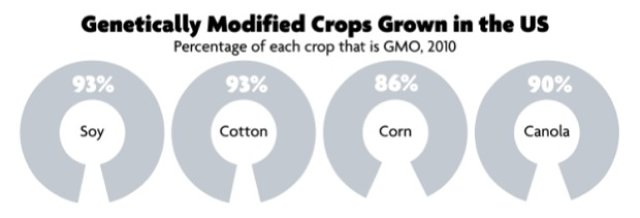
  As previously mentioned, in North America, soy crops are one of the most heavily-sprayed crops, and are mostly grown using genetically modified seeds (91% of soy grown in the US is genetically modified).

  So, should ALL soy be avoided? Unfortunately, there is no 'one size fits all' answer. I think that is a personal choice. Since I have found out the negative effects of soy, I have done all I can to steer clear of it, whether it's fermented or not. Sure, I'll occasionally have soy sauce when I have sushi. But that's about it.

  If you have questions, or are confused, do your own research. More information, and better understanding is never a bad thing. Ultimately take responsibility of your own health, and keep in mind: everything in moderation!

LINKS:

Friday, February 17, 2012

Arsenic in Organics


  Ok, parents here's something new to be on the lookout for. Articles released this morning by Food Safety News and various other news sources indicate that high levels of ARSENIC has been found in organic foods such as: baby formula, cereal bars, and energy shots. 

  Brown rice syrup, used in many organic foods as a sweetener, as a substitute for the increasingly-unpopular high fructose corn syrup, is the culprit. Also know as OBRS, a Dartmouth College research team found that these foods containing brown rice syrup have high levels of arsenic -- at rates well above the limits set by the Environmental Protection Agency for drinking water.

  At the present time, there are no regulatory limits on arsenic levels in food in the U.S. Findings such as these might indicate that some kind of regulation needs be set. In water, the EPA set the limit for public drinking water at 10 parts per billion (ppb) in 2001.

  After testing 17 infant formulas, 29 cereal bars and three different energy drinks, the team found levels significantly above the level established for public drinking water.

Organic Brown Rice Syrup is the culprit.
  Arsenic levels ranging from 23 to 128 ppb were found in cereal bars. One of the energy drinks registered at 84 ppm, and the two others hit 171 ppb. The infant formula came in at 8.6 ppb for dairy-based, and 21.4 ppb for soy-based.

  The two baby formulas that contained brown rice syrup had arsenic levels that were more than 20 times greater than each of the 15 formulas that didn’t contain brown rice syrup. These products were Baby’s Only Organic Dairy Toddler Formula and Baby’s Only Organic Soy Toddler Formula, both made by Nature’s One.

  High levels of arsenic exposure can raise a person’s risk for cancer and heart disease, and young children who ingest too much arsenic may suffer lower IQs and poorer intellectual function. It's obviously most-concerning in baby formula because many times, formula is the sole source of nutrition for infants, if they are not breast-fed.

  So once again, information is power. Let's continue to pay attention to what is being put into our food. And urge that the safety of the food being put on our shelves continue to be researched, and maybe more-importantly, regulated. 

  ~ Sabrina 

Pin It

Thursday, November 3, 2011

GMOs - What Can We Do?


  Here we are...back to GMOs! You didn't think I was done calling-out the American food supply, did you?

  First I told you what GMOs were. Then I told you how they negatively effect our health, and our environment.

  So now, what can we do to identify them in the grocery store and more importantly, avoid them?

GMOs & Their Effects
  But first here's a QUICK recap: GMOs are Genetically Modified Organisms. They are organisms (seeds, plants, animals) whose genetic material has been altered from its natural state. DNA molecules are combined with different sources to create a new set of genes, and essentially a new organism.

  The US food supply is full of GMOs, but they are most prevalent in corn and soy crops. Unfortunately for us, corn and soy is found in virtually everything these days!

  And while the effects on our health (rise in infertility, obesity, Diabetes, Autism, Parkinson's, asthma, cancer, etc rates) cannot yet be directly linked to GMOs, they haven't been proven safe either.
 
  In 2009, the American Academy of Environmental Medicine publicly condemned GMOs in our food supply. Saying GMOs posed 'a serious health risk.' They also asked the U.S. government to implement an immediate moratorium on all GMO foods, and urged physicians to prescribe non-GMO diets.

GMOs have infiltrated our food supply!
  Personally speaking, I'm not going to wait for the government to tell me they're unsafe. The long term consequences of GMOs on our health and environment have NOT been adequately researched. Since learning how potentially harmful GMOs are to our health and environment, I quickly became determined to avoid them at all costs. So what do we look for?

How Do We Identify Genetically Modified Foods?
  Since GMO foods are not labeled in the US (like they are required to be in over 40 countries worldwide), identifying them can be somewhat difficult. But it's not impossible. All it takes is a little diligence on the part of the consumer!

Non-GMO Project seal.
  Keep in mind that roughly 80% of packaged foods in the U.S. contain GMO ingredients.

  First and foremost, when buying processed/packaged goods, look for the Non-GMO Project verified seal. Products with this seal have undergone independent third-party testing to ensure they have been made to best avoid GMO ingredients. So this is a helpful tool.

  The second thing you must do when buying processed foods is look at the ingredients list! Avoid at-risk ingredients (the big 4): corn, soybean, canola, and cottonseed products. Okay, this is nearly impossible, so let's move onto step three.

Pick & Choose When to Buy Organic -- the Dirty Dozen & Clean 15
  When buying fruits and vegetables it's a whole different ballgame. Federal researchers found that certain types of organic produce can reduce the amount of toxins we consume on a daily basis by as much as 80%!

  The "Dirty Dozen" is a list of produce that contain the highest amount of chemicals, and should ALWAYS be bought organically.

  When 'conventionally' grown (non-organic, with chemicals), these fruits and vegetables tested positive for at least 47 different chemicals, with some testing positive for as many as 67. Those numbers are frightening if you ask me!

  Do we really want those pesticides in our bodies? Here are the Dirty Dozen: Apples, Celery, Peaches, Strawberries, Domestic blueberries, Nectarines, Sweet bell peppers. Spinach, Kale and Collard greens, Cherries, Potatoes, Imported grapes, and Lettuce.

  I know buying Organic produce can get expensive. So there's also a "Clean 15" that lists fruits and vegetables that have little to no traces of pesticides when grown 'conventionally' (non-organically).

  The Clean 15 are: Onions, Avocados, Sweet corn, Pineapples, Mango, Sweet peas, Asparagus, Kiwi fruit, Cabbage, Eggplant, Cantaloupe, Watermelon, Grapefruit, Sweet potatoes, and Sweet onions.

   By keeping these two lists in mind, you can avoid a great deal of harmful and unnecessary chemicals! In my opinion, it's best to have a "No Chemical Policy." Since when is it okay to consume chemicals?

Just Label It!
Demand GMOs Be Labeled  
  The last thing we, as consumers can do, is continue to push our government to label GMO foods. We need to make these harmful foods more-easily identifiable in the grocery store!

  As I mentioned before, over 40 countries worldwide label modified foods, so why is the US so far behind?

  The Center for Food Safety recently started the Just Label It campaign. The CFS has petitioned the FDA demanding it require the labeling of modified foods. Go sign it! This link will send your comment/request to the FDA and President Obama.

  While it may be difficult, and somewhat time-consuming, I encourage you to be diligent on your own, and pay attention to what is in your food! A chemical is never a good thing to put in our bodies.

  After all, we only get one of them! Be mindful of how we are treating it!


  RELATED POSTS:

 LINKS:

Tuesday, October 11, 2011

Soy: The Health Food. Right? WRONG!!

Yum -- protein shakes!

  Each day in the summer, I've made it a habit to make myself protein shakes after my afternoon workouts. It helps with recovery and rebuilding of muscles. And, since I don't eat much meat, it's a great way to supplement protein into my diet without having to do anything too drastic.

  Or maybe it's just an excuse to have a chocolatey snack right after a hard workout? I'm not sure which one, but probably a little bit of both.

  So I'd load up the blender with ice, chocolate protein powder, strawberries/blueberries, half of a banana, yogurt, and chocolate SOY milk. Skreeeeeeeech........what?!?! SOY??

  Up until last spring I was still under the impression soy was 'good' for you. After all, Silk soy milk had that heart-healthy logo on it, and it had always been touted as being a healthy alternative to cow's milk. So what did I miss?

The soy milk I USED to drink.
  Here's where the infamous Jillian Michaels podcasts enter in. I was listening to an episode, where JM mentioned in passing "anything but soy" in reference to what kind of milk is the healthiest/best for you. I was shocked. Her statement alone sparked my interest: I had to find out what I had clearly missed.

  The first thing I learned was that soy was high in phytoestrogens. Phytoestrogens mimic estrogen in our bodies. And that the leading causes of breast cancer, endometriosis, uterine fibroids, and infertility is estrogen dominance. So WHY would we want to be consuming a food that is higher in phytoestrogens than any other food source?

  Men should steer clear of soy as well. For you guys out there, check out this article on the side-effects of too much soy in men: http://www.menshealth.com/nutrition/soys-negative-effects.

  Another place where soy is used a lot is in infant forumulas. A baby drinking the recommended amount of soy formula is consuming a hormone load equivalent of four birth control pills a day! It's no wonder we've seen a rise in early puberty among our children.

  The second thing I learned about soy was that it is damaging to your thyroid. Soy is considered a goitrogenic (thyroid suppressing) food. Goitrogens prevent your thyroid from getting the necessary amount of iodine.

  When your thyroid fails any number of things can happen: you gain weight, you get cold more easily, you're more easily fatigued, you have a harder time regulating your moods, and you have a more difficult time concentrating and remembering details. When it comes down to it, you don't want to mess with your thyroid.

  The third thing I learned about soy was that it was rich in trypsin inhibitors. Trypsin is a digestive enzyme that helps our bodies properly digest protein. Without enough trypsin, you're looking at a lot of uncomfortable digestive issues (no one ever wants these!), and also might lead to future problems with your pancreas.

  Finally and maybe most-importantly, soy is a GMO crop. I wrote about GMOs and their effects in two earlier posts (Do You Know What GMOs Are? and The Effects of GMOs). But I will quickly sum up why this is a bad thing.

  Soy is a crop that is covered in chemicals and pesticides that are linked to cancer, infertility, Parkinsons, Diabetes, etc etc. Do I need to go any further?

Soy is found in many food items!
  After I learned the real truths to soy, I immediately stopped buying soy milk. Instead I will use organic cow's milk, or almond milk in my protein shakes. I also make sure not to use soy protein powder in my shakes. Now I buy whey protein. I used to also enjoy a plateful of edamame at Japanese restaurants. Not anymore. (I'm not vegetarian or vegan, so I've never had tofu, but that's also something I would avoid.)

  What was surprising to me was how I seemed to miss the boat on soy for so long. I thought I was fairly well-informed on the dos and don'ts in the nutrition world. But apparently not!

  If something can have such negative effect on our health, why is it still being touted as 'healthy'? Especially where kids are involved! My biggest advice: stay diligent, and know what's in your food!

  Hope you found this useful and informative!
Pin It

LINKS: