Showing posts with label Germany. Show all posts

Monday, April 29, 2013

Running Down A Dream: Cope's Journey to the NBA

Chris in Aalst, Belgium.

  Every August, hundreds of American basketball players, both men and women alike, head overseas to start their seasons anew.

  The game may be the same, but I have found that the motivations are different.

NBA vs. WNBA Dream
  From my perspective, women seek out the experience: of living abroad for a couple of years, while continuing to play the game they've grown to love. Salaries are less, and because the WNBA season does not coincide with the traditional basketball season, it is more of a choice for women to make the jump overseas to continue their playing career.

  Playing in the US hasn't always been an option for women, yet they've been heading overseas to play basketball for decades -- long before the WNBA was ever around. The WNBA was not the ultimate dream.

In Trier, Germany.
  Maybe the motivation is changing, however. And the dream of young girls today is to play in the WNBA, and never experience Europe.

  For boys, who play basketball and grow up watching the NBA, donning an NBA uniform is their dream. It's the ultimate goal. And it always has been.

  If they are not one of a handful of athletes selected every June in the NBA draft, they head overseas as well.

  They bid their closest friends and family members farewell for eight months, and chase that dream. Searching for just one opportunity that might lead to their big break back home.

  While a good living can be made abroad, the dream remains inside: to return to the US, and play in the NBA.

  There are varying levels of leagues in Europe, and throughout the rest of the world. Some you might call semi-pro, while others are on par with the talent seen in the NBA. Along with every other level in between.

  Chris Copeland has seen them all. Literally. But he never lost sight of his dream of putting on an NBA jersey.

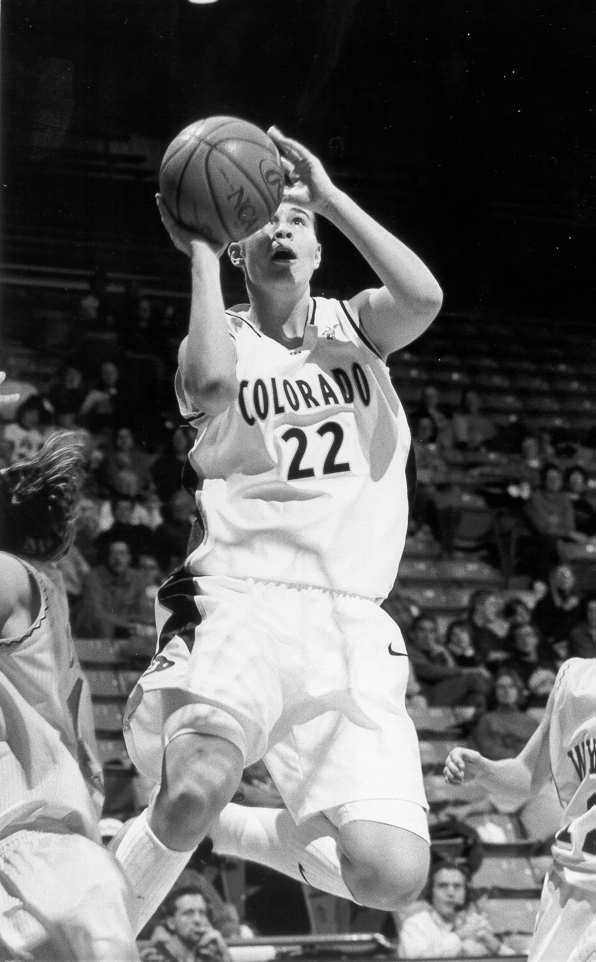
Colorado days.
Cope's Story
  Chris was a freshman at Colorado when I was a senior. I can't really say how much I saw Chris play during that 2002-2003 season. Busy, diverging schedules as student-athletes didn't allow for too many games.

  But I saw enough, through practices and a handful of games, to know Chris was a basketball player. A gym rat. A hooper.

  He was skilled. Had great fundamentals. Was big and had a great shot. And had a feel for the game you couldn't teach. He also had a lot of work to do, but the most important thing, the foundation, was there.

  Fast forward seven years later to the 2009-2010 season. While we both played in Germany, I saw Chris play twice. I couldn't believe the strides he had made in his game since I'd last seen him play at CU.

  In basketball, being a 'tweener' isn't a good thing. You essentially have no position. While at Colorado, Chris was a tweener. He was a big three, and a small four. He had a great face-up game, but lacked the speed and quickness needed to excel as a small forward. And his post game was non-existent. So he was a face-up four.

  In the seven years that had passed since I'd last seen him play, while finishing his eligibility at CU, and though stints in the D-League, and stops in low-level Spanish and Dutch leagues, Chris developed and worked on his weaknesses. He went from being a tweener, to being versatile. And versatility is a huge asset in a basketball player.

  The player I saw in Germany resembled the kid I remembered at CU in looks, and looks alone. But his game suggested he had changed a great deal. Immediately I could tell he had diligently worked on his post game.

A threat from the wing, or in the post.
  His German team, Trier, ran their entire offense through him on the block. He demanded a double-team every time he touched the ball.

  Chris was essentially his team's play maker from the power forward position. Guard him one-on-one, he'd attack (and usually score). Double him, and he'd make the pass to an open teammate. Guard him with a big man to take away his post game, and he'd simply step outside and exploit his advantage there.

  Cope made it look easy. He was racking up the points and accolades, and turning heads in Europe.

  Chris and I, again, found ourselves in the same corner of the world in the 2011-2012 season. While I played in Dunkerque, I saw him play last season, in Belgium for Aalst (which I blogged about last year). And again, I saw huge growth in his game, and more-strikingly, his confidence and approach off the court.

  On the court, Chris continued to dominate and score points in bunches. Off the court, Chris threw himself into the NBA world. Constantly studying games and players. He had a one-track mind: the NBA or bust.

  His dream was alive and well. And seemingly closer and closer to becoming reality.

  After seeing him in Belgium, I knew if he got an opportunity, he'd make it happen. Which is exactly what happened.

Summer league in Vegas.
The Opportunity
  The summer of 2012, Chris finally got the chance every professional player waits for: he signed a non-guaranteed contract with the New York Knicks.

  He headed to summer league in Las Vegas, where he quickly began making his mark. And then to training camp in October, where he'd compete to make the Knicks final 15-man roster.

  At any point, Chris could have been cut.

  But just as he'd worked his way up from lower level pro leagues, to more prominent leagues each and every season in Europe, he stayed the course. On November 2, 2102 against the Miami Heat, five full seasons after finishing his eligibility at Colorado, Chris was a rookie in the NBA.
 
Our Convo -- Catching Up With Chris
  In a 25-minute phone conversation in early-April, I caught up with my fellow University of Colorado Buffalo. To hear his thoughts about his journey to the NBA. To see what the trip has been like, in his own words.

Chris and I a couple years back in Germany.
  I frantically typed as I tried my best to play the part of reporter while interviewing a friend. An odd, but fun conversation.

  There have been a few stories recently on Chris, so I wanted to focus on something I'm familiar with: comparisons between Europe and the game in the States -- the NBA. 

What did you focus on improving the most, from the time you finished at CU, until last summer?
Most recently, my focus has been on the defensive end. But since graduating, I've been try to improve all areas of my game. Ball handling, become a better athlete, my quickness. Before I thought I knew it all, but really became a student of the game. 

Was there a time where you lost sight of the NBA, and thought you couldn't make it?
Every day. When you're overseas you have your up days and your down days. You have games where you go 0-fer and you question yourself. You say to yourself: so-and-so was overseas, and he would never have gone 0-fer. A little doubt creeps in along the way.

But I always was confident, and knew I could make it. I am blessed to have a great circle of people around me.

When did it really hit your radar -- that the NBA was possible, it was right there in front of you, and you just had to grab it?
Summer league. I finally got the opportunity then, it was like, 'It's up to you. and you just gotta get the job done...'

Biggest difference between the European leagues you've played in, and the NBA...styles, level of play?
Had to double in the post.
Athleticism. Everyone is bigger, faster, stronger, quicker.

How has your approach to practice changed? To games? 
I'm working as hard as I have ever worked. I'm in the weight room, I'm shooting a ton of extra shots, getting extra workouts in.

In Europe, if you wanted to get extra work in, it was just you on your own, or maybe one of your teammates wanted in too. Now, if I want to shoot, I can grab two coaches and shoot as much as I want. So I've probably put in as much work on my own now more than ever.

What has changed for you from your most recent season in Europe, to this season? Role on team? Mentality? Individual goals? How have you adjusted from going from THE man on a team, to one of the last guys to make the roster?
It was a big time adjustment. But I knew what was expected. I was expected to be the 15th man. I just wanted to be in the NBA though, and put on a jersey. I was willing to sacrifice everything just to get there.
 
Knick huddle.
How has that changed over the course of the season as you've proven yourself?
You reach one goal, and then you set new ones. I've always had extremely lofty goals. I have new goals now...not going into too much detail, but it'll revolve around me doing a lot more work on the court. 

How stressful was training camp? Does it compare to anything you had experienced before?
The most stressful training camp I ever went through. You always feared you could be cut any day.  I had no contract. I understood that if you're not on your game, you could get sent home. 

What about your experience overseas helped you this season?
You develop that sink or swim mentality. You find out quickly in Europe, if you don't play well, they'll get rid of you. I'd been through that before, so that carried me through the whole training camp process.

Being in Europe also helped me realize the attention to detail that's needed. I had coaches who had us going through two-a-days all year round out there. But then my most recent coach was more relaxed. I found I needed something in the middle. So I learned how to train. Every player is different, and needs something different. But I learned what I need to be successful, training wise. 

Again, in Germany.
What kind of adjustments have you had to make going from being in small European towns to playing in New York?
It's dope, it's nerve wracking, it's fun. But America's my home, and this was my dream ever since I picked up a basketball as a little boy.

At the same time, it's difficult because you know everyone is watching. But my faith in God has helped me get through. 

Compared to your days in Europe, day to day, what is different for you?
The stores are open later. Restaurants are open all the time. That was the always the weirdest thing for me to adjust to in Europe. Siestas, banks closing midday, etc. Everything is more accessible, more available in the US. 

Is there anything that has surprised you along the way?
How cool my teammates are. Coming in, you heard stories. So you may have thought they would be the most difficult to deal with. But they're looking out for me. Some guys with bad reps have been the coolest to me. 

First, and most-recent, 'wow' moment?
The stars (celebrities) who have come up to me and have said 'I'm a fan yours'. And then I just say to them nooooo, I'm a fan of yours. That's been pretty wild.

Post-game duties in Aalst.
Do you and your teammates talk about Europe?
Not really. With guys who have been overseas before, like Melo and Amare, we talk about places to visit. We don't talk about the basketball really. 

But with guys who've also played in Europe, Pablo (Prigioni) and James (White), we exchange some battle stories every once in a while.

Knowing you, I already know the answer to this, but would you change anything about the path you've taken thus far?
No, it was tough. But I've made so many great relationships in my time overseas, it makes it that much sweeter. 

What's the one word of advice for someone who's trying to do what you've done?
It's difficult. Be focused. Be prepared for some dark days, you'll go through a lot of trials. But it can happen if you stay focused, and keep your eye on the goal.

  This is a guy who is the epitome of a gym rat, a basketball junkie. But not every gym rat makes it. There are dozens of guys who, just like Chris, if they get the opportunity, will turn heads. But they might not ever get that chance.

  For Chris is was, and continues to be, work ethic and focus plus the opportunity, and finally, making the most of that opportunity.

Putting in the extra effort on the court.
  Chris refused to quit. He had all the reasons and all the opportunities to throw in the towel on the NBA, and be satisfied with stardom in Europe. But he wanted more.

  So this lifelong Trail Blazer fan no longer checks the Portland box score first thing in the morning. That honor is now reserved for Cope and the Knicks. It's been fun watching his journey from afar -- his is a very special, and inspiring story.

  If I've learned one thing about Chris, it's not to doubt him. He continues to grow and improve as a player, and the basketball world continues to take note. Just this past month he was named NBA Eastern Conference Rookie of the Month for April for his torrid end to the regular season.

  Just a taste of things to come? If you listen to Chris, he'll be on the court, putting in the work. I, for one, am excited to see what he's got in store for us next.

RELATED POSTS:


Wednesday, March 20, 2013

Rookie to Veteran

 Our scudetto dinner -- celebrating our championship!

  Somewhere along the line I went from rookie on the team, to team vet. The team 'baby', to team 'mom'. The young and spry one, with her whole career ahead of her, to the not-so-spry-one, with her career coming to a close.

  I don't know exactly where the transition point occurred, but I've been fully towards the side of 'experienced' for quite some time now.

  I look back on the things I did, the way I was as a rookie, or a younger player, and laugh a little. I recognize the ways I have changed as my career has progressed, and of course you think you've changed for the better.

  Even so, it's always fun to look back.

  One thing you always wish you could do is ease the growing pains of the the younger version of yourself. To educate her on a few things: the expectations on the court, the ways of the leagues, how to be better prepared, how to take care of her body, and living abroad in general.

  But I suppose that's the whole point of being a rookie. It's your time to learn. Nearly every experience is a new one. And no one can give you the answers. You have to figure it out for yourself, and adjust accordingly. You either figure it out, or you head home.

Mental Adjustments
Warming up for my first game as a pro!
  I was blessed with an amazing team my rookie year in Italy (Como). We had an incredible group of professionals who couldn't have been better role models for me. I was lucky to have them to learn from. And I think it was my two years in Como that really shaped me as a professional, and set the tone for the rest of my playing career.

  I looked up to my older, more-experienced teammates, and admired them a great deal. I remember wondering how they 'did it' on a day-to day basis. Their consistency. They were always there, physically and mentally. No matter what. I strived to match them.

  So between my rookie year in 2003-2004 and now, I've hopefully grown into a player the younger girls on my recent teams look at in a similar manner.

  I've never been the 'team mom' type, and I never will be. I'm not the rah-rah cheerleader. But I will lead by example.

La Comense strolling the streets in Sicily.
   As a rookie, I didn't understand the expectations that were on me as a player. I was happy to be on a successful team. I saw the team's success as my own success. But at some point, the team (president, management, coaches, sponsors) wanted a high individual return on their investment.

  It took me several years to figure out, especially as a foreigner, you have to produce, statistically speaking. If you're on a winning team, all is well. But the second your team loses and you're not meeting individual expectations, there will be hell to pay.

  It wasn't college anymore. We had a team system, but it wasn't nearly as strict as the one I had played in at Colorado. It took some time, and some adjusting, but after several rough patches, I got through it.

  I took everything on a day-to-day basis my first few years. I didn't see much of the big picture. If I wasn't playing well, was home sick, or had just had a spat with my coach, it was the end of the world. Now, I brush it off, and know things will bounce back in the other direction as long as I keep plugging along.
Celebrating our championship!

  I also went from from not understanding at thing, whether it'd be specific things in practice, how leagues/championships function, or just day-to-day life as an American in Europe.

  On the court, this where I relied on my teammates again. If I didn't understand (because of language), I had to pay extra attention to them, to figure out what was going on. Practice wasn't going to stop just for you. I eventually learned Italian, and didn't have to rely on watching to understand.

  But the same can be said for my on-the-court adjusting with every team I've ever been on (eight countries in 10 seasons means a lot of different languages!).

  I learned the importance of the league championship because of how my teammates reacted. We won the Italian Championship my rookie year. And I didn't quite understand the magnitude of it until I realized just how important it was to my teammates. It was rare. And the only championship I've won as a pro.

My team vets -- they showed me the ropes!
  Another mental shift was probably the most important one I made. It was what allowed me to make a career out of basketball. It was realizing it was okay for me to be a basketball player.

  Prior to understanding this, I felt pressure to being doing something more 'grown up', and to know exactly what I wanted to do when I was done playing. While in my head I thought, 'I am doing what I want to do'!

  Now, I understand that a career as basketball player is a short one. And it's not a career that everyone gets the opportunity to experience, so I am making the most of it. And while life after basketball is still a daunting one, I'll tackle it, just as I've tackled every other crossroads in my life. 
 
Anything For a Little Extra Sleep
  I remember timing, to the last possible second, when I'd have to leave the house for practice. Heaven forbid I get there too early. In Como, I'd get caught on a regular basis, at the train tracks on my way to the gym. And each time, I'd freak out that it'd make me late. Thankfully, I never was.

  Or timing my morning routine to a T, so I didn't have to get up a second too early. At some point I started setting my alarm two hours before practice, no matter what.

My German team in the oldest gym ever. At least it seemed like it.
  I used to look at, morning practice especially, as something you just had to 'get through'. Your body was tired. You were sleepy. It wasn't even a full practice. You just had to get through it for an hour or so, and then you could hurry back home, have lunch, and try to have a nap before evening practice later in the day.

  Now I look at any practice as a chance to get better. If I'm going to be there, I might as well either get a good workout in, or sharpen up my skills, and make it worth my time. Also, being ready for practice means getting there in plenty of time, so you no longer find me waiting until the last possible moment to leave my apartment.

  One rookie mistake I never made was being late to practice. Something like that is international, and I had been well-trained in my four years at Colorado.

Physical Adjustments
  Mental and physical adjustments go hand in hand. My first few years, I was very insecure as a player. I was unsure of my game, and how I was going to contribute to my team. Every week was different. I was inconsistent. And I felt the pressure to play better.

  Maybe as I grew to understand the expectations placed on me, I've grown to have 100% confidence in what I do, and how I play. I'm comfortable with what I do on the court, and the things that I bring to my team. I'm not trying to be someone I'm not. I just try to be the best player that I can be. 

Wolfenbüttel, Germany.
  This might go without saying, but like many rookies, I never stretched. Before, during, or after practice. Now, there's really not a time I'm not stretching. Ask my teammates. You have to take care of your body if you want to last in this profession.

  Another huge change has been my attitude about my conditioning. Until my third year as a pro, I never did any extra work during the season. Whatever we did in practice, I though, that was enough for me.

  Over time, I grew to take pride in my conditioning, and my body. I learned that my body was the way I earned a paycheck. And an unhealthy body wasn't going to do me any good.

  The same can be said for my eating habits. Across the board, I've become a much healthier person from the time I was a rookie, until now.

Off the Court
  Adjusting to life in Europe off the court had just as many bumps as my on-the-court adjustment did. In my first years abroad, I complained constantly about the things you couldn't get in Europe. The midday closures. How impossible it was to get anything done (it took a month to get a phone line -- and internet -- installed in my house, for example). I'd get 'America sick' very easily.

Adriatic Sea -- in Croatia.
  To be honest, I have no idea how I survived my first two years in Italy. For one, I had dial up internet (no Skype, etc)! And 10 TV channels (all in Italian). I guess that explains why I can speak some Italian. And again, a testament to my teammates.

  I think my life was much more structured my first few years as a pro. We had two-a-days every day, the entire season. This was my life: practice, eat, rest, eat, practice, eat, sleep. Then do it all over again the next day.

  These days, I try (try, being the operative word) not to sweat what I can't control. I appreciate the pace of life in Europe a whole lot more than I did when I first played in Italy. Things are much simpler. 

  I distinctly remember having countdowns (until the day I got to go home), and eagerly crossing days off the calendar. Sometimes the countdown started as high as 70 days! It wasn't that I disliked my time in Europe, it was that I felt that I was constantly 'missing out' on something since I was always gone.

Hanging with teammates in Poland.
  Now, I'm not really in any hurry. I've found ways to meaningfully make use of my days. And I no longer feel like I'm always missing out because I'm in Europe. I look at my experience here just as as valuable, if not more so, than anything I would be doing in the US.

  I remember the day I got my first pay check as pro. My coach was actually the one who pointed it out to me. Up until that point, it didn't dawn on me, that I was actually a professional basketball player. I loved the game, loved to play, and I was just proceeding with the next step in my career.

  And I've been extremely blessed to do so. I look at my years in Europe as an enormous time for individual growth. You learn to believe in yourself because it's just you out here. Day in, and day out, you're the only one you can really rely on.

  Though my ten seasons in Europe, I've probably experienced every scenario you can as a basketball player, positive and negative, on the court and off. I've learned to make due, adjust, and have had an overall positive experience, no matter what. And it's made me a better-prepared, more well-rounded person because of it.


Monday, February 11, 2013

European Super Bowls

Getting settled in to watch the big game in Germany.

  Last Sunday, many of you had a big bash to watch the Super Bowl.

  I watched the big game too, but I can hardly call my watch-party a 'bash'. See, it was the middle of the night.

  Just like celebrating Thanksgiving in Europe, the people around me dictate what kind of Super Bowl party I'm going to have. And not too many people want to destroy their Monday, and possibly their week, just for the sake of an American Football game.

  Schedulers don't have the European NFL fan in mind when slating the biggest game of the season to kick off at 12:30 in the morning. I know, I know, Europe is hardly a hotbed for American Football fans. And definitely not in the target group. But as an American overseas, there's no way I'm missing the Super Bowl!

My Super Bowl XLVII 'party'!
  So I stay up all night, and watch the big game.

  I've always tried to find a way to watch, no matter where in Europe I was. Either with a group of friends who were just as excited to watch the football extravaganza, or by myself. It doesn't matter. I always want to watch!

  As of a couple years ago, it got a lot easier when I found ways to watch a live broadcast online. Before then, it was hit or miss. You either had to have a satellite package with a channel that carried the game, or you had to find a place in town that would stay open all night, and show the game.

  Here are a few memorable Super Bowl moments from my Euro days:

  Italy -- My second year in Como, in 2005, some friends and I made an Irish Pub in Cantù stay open through the night so we could watch the game. This was the Janet Jackson 'wardrobe malfunction' Super Bowl, and the European crowd hardly bat an eye. It was fun to watch the game with people from all over the world. There were a few other Americans in the crowd, but our watch-party definitely had an international flavor!

New Orleans vs. Indianapolis -- on the big screen!
  In between Italy in 2005, and when I played in Sweden in 2009, I don't remember getting to watch the big game. Unfortunately, that was before people started streaming live channels/sporting events online. I wasn't in an area where I had a place to watch it (or others around me who wanted to watch). And I never had a satellite package with a channel that aired the game live.

  I was so deprived!

  Germany -- In 2010 we watched the New Orleans/Indianapolis Super Bowl at the local movie theatre. It was probably the coolest way I'll ever watch the big game (unless I somehow get to watch it in-person in the future!). 

  The local movie theatre in Wolfenbüttel was one of our team sponsors (we actually watched game film on the big screen on a regular basis there too. THAT was scary occurrence sometimes! Imagine yourself making errors on the gigantic screen.)

This is the last I saw of Super Bowl XLVII -- lights out for me too!
Some teammates and I, and some of the men's team, had the entire theatre to ourselves. And we got to go get some popcorn too! (In Germany, the 'common' popcorn is kettle corn -- there's some trivia for you!) The only downfall was that we had to listen to German commentary. But not a bad trade-off!

  More often than not however, I watch the Super Bowl on my computer, in bed. If it's not a good game, as was the case this year, I can go to sleep right away! Though, if there hadn't been a 35-minute blackout, I may have stayed up for the whole thing.

Beyonce Halftime show.
  Obviously, I always prefer that it's a good game. If I'm going to put my sleep schedule out of whack, it might as well be for a competitive game! The downside of watching the entire thing, obviously, is that I'll be up til four or five in the morning.

  No one, outside of myself, in Dunkerque or Sweden, the most-recent stops in my playing career, has been too interested in watching an American football game into the wee hours of the morning. So being the sports junkie that I am, I watch it solo.

  It's not quite the same, but I enjoy it regardless. I couldn't exactly call myself a football fan if I didn't tune into the Super Bowl! What's the most memorable way you've watched the big game?

Friday, January 25, 2013

Cardio or Weights First?

Team workout in Germany.

  You've made it to the gym, what should you tackle first? The weight room, or the treadmill?

  Even the experts can't agree. Many of them have different answers, and different preferences. But truly, the answer depends on what your goals are. What are you trying to accomplish in your workouts?

  Are you trying to get stronger, improve cardiovascular training, or lose weight/fat?

Train With Your Goals in Mind
  Ironically enough, your fitness goals will tell you what you should do first! If your goal is to become stronger, and increase muscle: hit the weights first. If your goal is to increase aerobic endurance, or lose body fat, perform your cardio first

  The ultimate, most-efficient way to exercise is to do both, cardio and weights, at the same time via circuit training. If done at a high pace and intensity, circuit training can be considered a form of High Intensity Interval Training (HIIT).

  The key to circuit training is that there is no rest. At least not the kind we're used to seeing. Never are you just sitting or standing (in between sets) idly doing nothing. Your rest time is active rest, either by moving to a different muscle group, or doing a cardio interval, as the muscle groups you've just worked, recover.

  By training in this fashion, your heart rate is always elevated, working both cardiovascularly and muscularly.

Weights First, Hypothetically
  If you prefer to focus on one thing at a time -- strength training and cardio separately -- it is said to lift weights first.

  You should do strength training first because at the start of your workout, there's more blood sugar available to burn through. Your muscles will have a more powerful contraction, resulting in a more powerful workout. You get the most out of your muscles by lifting weights first, and then finishing with cardio.

  Hypothetically, you burn through the available sugar (during the weight session), and during the cardio session, your body moves into burning a higher percentage of stored energy (fat). I say hypothetically because there really isn't much research to back up this assertion. 

Personal Preference and Consistency
  I also look at it like this: what do you prefer? What is your routine? In my opinion, whatever keeps you going on a consistent basis, is the right way to go.

  For me, I prefer to do my cardio first because I like my muscles and body to be warm when I start lifting and doing more-explosive exercises. But, I also am not throwing around extremely heavy weights either, so needing a high level of power isn't as necessary. I have not 'maxed out' (or anything close to it) in the weight room in quite some time!

First season in Sweden. 2008-2009.
  You also might find yourself skipping the second part of your workout (because you're tired from the first part, or are running short on time), so do whatever you enjoy doing the most, first. You're going to put a better effort into something you enjoy over something you despise!

  Likewise if results are most important to you, do what coincides with your goal, first. So if you do skip part of your workout, it's not the part that's the most important!

  I can speak from experience about this too. On the occasions when I do lift before running, I find myself lagging and wanting to cut my cardio workout short. And I always want to get a good cardio burn in, so I prefer to focus on my cardiovascular goals. 

  All in all, despite what you are good at, or what you like, it all comes down to what your goals are, and how much you value accomplishing those goals.

  If you have a goal to lose stomach fat, doing 1000 sets on the bench, or any other muscle-isolating lift, isn't going to help you reach that goal. And vice-versa: if you're trying to get more explosive muscles, running for hours on end on the treadmill isn't going to get you any closer to accomplishing that goal.

  Take a look at what you want to accomplish, and go from there!

 LINKS:

Wednesday, January 16, 2013

'Good Game'

Poland days.

  In sports, what qualifies as 'playing well'?

  It's a very broad term, with vastly different meanings.

  I came across a tweet earlier this week from a basketball coach, Kevin Eastman, and it got me thinking on the subject. Here's the tweet:

  @kevineastman: Your stats may be good but that is not how you should judge your performance. It should be judged against your standards & not just stats!

The Stat Sheet
  Far too often, a player is quick to grab the stat sheet and check their line following a game. I've always wondered, what are they looking at? Where do their eyes go first? What do they value the most? They already know the final score, so they're not checking that!

  To many, players and fans alike, playing well (in basketball) is defined solely as scoring a lot of points. Personally, I think that's a naive way to define it, the lazy way -- the novice's way.

Post game -- Germany.
  Different players have different skill-sets, and different roles. With that, each players' abilities alter a game in different ways. So points alone might not do their game justice.

  There are players who have an unbelievable ability to put the ball in the basket. So yes, their role may be that of scorer. But if a 'scorer' puts up 20 points, it doesn't give him a free 'good game' pass. What if it took him 25 shots to get his 20 points? What if he isolated himself from his teammates, and took poor shots? What if he did nothing on the defensive end of the floor?

  Or what about a point guard -- she dished out nine assists -- good game? What if she also had seven turnovers, or didn't make the right plays at the right times?

  As competition gets better, the game gets more intricate, and roles are more specifically defined. The point of the game will always remain the same: put the ball in the basket. But not everyone can be a scorer.

Hyped bench -- Sweden.
  What do YOU bring to your team? What is YOUR role?  

  By themselves, stats have no value in my book. Basketball has too many game-influencing factors to be defined solely by numbers.

A Feeling
  For me, playing well has always been a feeling inside me. I know when I play well. I know when I play poorly. I don't need the stat sheet to tell me. And I don't need any one else to tell me.

  I play to my own expectations. 

Warming up in Dunkerque.
  Yes, you need your coach's input about specifics to your team, whether it'd be a strategy, or a particular play. But even so, I know.

  I smile sometimes when talking to friends about their own games. I'll ask them, 'how did you play?' Some will shoot back their stat line -- how many points they scored, or how many rebounds they grabbed.

  But that's not what I asked, I think to myself...

  Basketball is more than just stats, or numbers on a board. It's about winning. It's about your team. It's a feeling.
 

Friday, December 14, 2012

The Injury Treatment

In a physical game, there are bound to be injuries!

  Injuries are a part of athletics. Unfortunately, over the course of a long season (and an even longer career) they are very difficult to avoid. Whether it's a major injury, or minor bumps and bruises, eventually there will be something you need to give extra attention to, and potentially miss a practice or game for.

  I've had my fair share of bumps and bruises, and a few major injuries along the way. So I thought it might be interesting to think back on the differences in how injuries/illnesses are treated in the various countries I've played in, including the US. 

Inner Voice vs. Outside Voices
  As a competitor, you always have that voice inside of you, urging you to get back on the court. But sometimes that voice is too eager. It's during those moments where it's important to have professionals around you, who you trust, advising you.

  Another aspect is the attitude the people around you have towards injuries/illnesses. What sorts of things are you hearing from management, coaches, fans, etc as you prepare for games? You may get pressures and feelings from influential people that don't necessarily match up with the feelings of the medical staff.

No foul.
  There's nothing worse than feeling you aren't doing what's best for the team, that your personal heath isn't important, or having your toughness questioned.

  For me, some seasons have been more injury-riddled than others. So sometimes you get a little too-familiar with the medical system, and while they're usually great people, get to know your team physio too-well.

  I've always had great medical staffs take care of me and my teammates. From college, and throughout my time in Europe as a pro. I think I've learned something valuable about my body, and how it 'works' from each and every one of them. So I thank you for that!

Ice or Heat?
  One of the most-diverging thoughts between treatment in the US and in Europe has to do with whether to ice or heat an injury. In the US, we ice everything, at all times. In Europe, you will only hear your doctor or trainer tell you to ice if it's within 48 hours of sustaining an injury. Anytime after that, they will tell you to use heat.

  As an American, my first inclination has always been to ice. It took me several years to break that mentality. Now, I think: what am I about to do? If it's to prepare for a practice or game, I heat. If it's after a workout, practice, or game, I ice. You want warm, loose muscles as you prepare to play. And after playing, you might have some aches and pains that icing will help.

Treating the Pain versus Treating the Problem
  After 10 years in Europe, I've found there is a second vastly different treatment belief. I think the people I've worked with in Europe are more concerned with your individual body structure, why something is causing you pain, and how they can cause the pain to stop. They then work with you either through exercise/rehab, or manipulating/adjustment to hopefully make a more-permanent structural change.

  I think in the US we treat the pain first and foremost. Instead of treating what's the root of the problem and what's causing the pain, the why am I feeling pain? We are too quick to ask, how can I cover up the pain, by taking this pill, or getting that shot.

Getting my broken finger attended to.
  After thinking that way for a long time, I am now 100% anti-pill, and anti-shot. We feel pain for a reason. Masking it, does not help. If I have pain, I want to be able to feel it, and make a decision from there.

  I've clearly just made a gross generalization. But it's my personal belief based on my experiences. I obviously have a lot more experiences in Europe, especially as of late. Of course, there are medical professionals in both the US and Europe that don't fit either mold I have just put them into.

Elevated Heart Rate 
  A third difference comes before you ever step foot onto the court. In Europe, you're required to pass a physical before you can compete for your team (it's usually written into your contract).

  Those physicals include an EKG, observing your heart both at rest, and with an elevated heart rate. Since that is what basketball consists of, competing with a raised heart rate, the doctors want to ensure you are fit to do so.

  In the US, I never had my heart tested at an elevated level (that I remember). That practice may have changed in the 10 years I've been competing in Europe, however.

  Here are a few specifics about some of the places I've played: 

Italy - We had a doctor who came on occasion, and a trainer who was at every practice. It was my first experience as a pro, and I quickly learned that it was up to you to get yourself taken care of. They weren't going to check up on you, or make you come in for treatment. You'd just better make sure you were ready to practice and play.

  I didn't have any injury or illness that caused me to miss time during my two seasons in Italy.

Poland - No team doctor. Trainer/massage therapist who was very attentive. I didn't have any issues that caused me to miss practice or game time.

Poland.
Bosnia - No team doctor, no physio/trainer present at practice. I had a horrible ankle injury in a game in November. The doctor put a cast on me, and said to come back in a several weeks. No rehab, no exercises, nothing.

  After a week of listening to him, I cut the cast off myself because I knew I needed to be doing rehab exercises, and using my leg muscles, if I wanted to come back and play in a reasonable amount of time.

  After another week or so, the doctor wanted to put another cast on me. So I told the team I needed to go home and get it taken care of. I did just that. I didn't play competitively until the following season.

Sweden - No team doctor, no physio/trainer present at practice. We had access to a great physio when treatment was needed. I found that less importance was placed on massage therapy, and more on exercise and rehab exercises.

  If you were sick, even just a little, you did not practice or play.

Germany - No team doctor, no physio/trainer present at practice. I had various injuries in Germany, and two AWESOME physios to take care of me.

  I had a foot injury that caused me to miss almost a month of practices and games. After a few games, and the team started to lose, I felt pressure to play from management; that I needed to play, no matter what.

  With illness, if you were on antibiotics, they told you not to practice.

France - Team physio present for games, but not practice, and access to physio/team doctor throughout the week. I think out of all the countries I've played in, the French are the most-cautious. They are very quick to hold you out of practice for something I would consider minor.

Trust
Playing days at CU.
  I think it's important to understand that trainers and doctors are employed by your team. Their job is to get you on the court. And your job is to be on the court. You can imagine that those unified attitudes can get you into trouble on occasion, and you push a little too hard.

  That's where trust comes into play. You have to trust yourself and your body, first and foremost. And you have to trust that your trainer/doctor has your best interest at heart, that they pay no mind to the pressures of winning or losing one particular game.

  I've said it many times before: when it comes down to it, my job is to be ready to play on game day. That may include resting a time or two during the week, to allow those aches and pains to heal up. But I've found that the most important thing to do is to listen to your body!

Your Health First
  As my career has progressed, I have taken on a different attitude towards injuries. Before, I would play at all costs. Maybe I thought I was invincible, and could play through anything. Now, not so much. I am very cognizant about long term implications and effects from playing through injuries. I think that mentality changed about three or four years ago for me.

Always playing with contact.
  And not that I question trainers, doctors, physios now, but if I don't feel comfortable with treatment, or how something feels, I won't hesitate to speak up. Whereas earlier in my career, I would have taken everything at face value, unquestioned for the most part.

  I think that comes from learning more and more about my body each and every year, knowing myself, and truly wanting to do what's best for my health. Instead of years before, where my only concern was: 'what's the quickest way I can get back on the court?'

  Having supportive people, both in management and on the medical staff, is really important when trying to overcome injuries or illnesses, no matter their severity. Having a united front, where everyone believes in the methods, is beneficial to everyone.

  Again, thanks to the many trainers, physios, and doctors who have helped keep me healthy! It really is a team effort.
P.S. I'm knocking on wood throughout this entire blog.

Friday, October 19, 2012

Euro Living, Part V: Lifestyle & Night Life

Duomo in Milan.
  
  Last Spring I started a series on Euro Living. A collection of the things I find interesting, cool, funny, annoying, etc about being an American living in Europe. I made it all the way through four blogs, and then I got distracted -- I went home! 

  There was one more post I wanted to publish, but I didn't get around to it this summer. 

  So a few months late, here's the conclusion of my Euro Living series! For the rest the entries, check out the links below.   

Social Life and Alcohol

  Going out in Europe is a whole different experience than it is in the States. Clubs and bars routinely stay open until 6am throughout Europe, if not later (or is it earlier??). With a few exceptions, everything closes by 2am in the US -- usually when people START going out in Europe.

  I think it's more normal for kids (mid-to-late teens to early 20s) to start going out at a younger age in Europe than American kids do (though I hardly know what's normal, and never did!). In the US, if a kid says he's going out, it has a negative connotation. That usually people take it as, he's up to no good. In Europe, it's just a part of growing up, and partaking in the normal social life.

Post game festivities in Italy.
  Of course, alcohol is looked at drastically differently in Europe in comparison with the US. Between the drinking ages (21 in the US, across the board, and 16-18 years old in varying European countries), and differences in culture, it's my observation that Europeans develop a different attitude towards alcohol than Americans do.

  Because Europeans have a younger drinking age, it seems that kids learn how to 'deal with it' earlier in life. It's not taboo, so kids aren't hiding it from their parents (as happens in the US). They're at an age where they're still living under their parents' roof, so there is supervision. Because of this, parents can teach their kids a few lessons about what they believe to be appropriate behavior.

  Having wine or beer at lunch (even during the work day) is not seen as a big deal in many European countries. That can hardly be said for the US. I've also observed women in Europe drinking an occasional glass of wine or beer while pregnant without hesitation. In the US, witnesses to that would look at the mom-to-be in horror.

Heading out for some fun in Sweden.
  Legal blood alcohol limits (to drive) are much lower throughout European countries. .08% is the legal limit in the US. Whereas .05% is commonly seen in Europe (Italy, France, Spain, Greece, Austria, and so on...). In Sweden, and a few other countries, the limit is as low as .02%. With lower levels, driving after just one drink is not worth the risk, so people do not drive. Period.

Lifestyle

  It's no secret that Europe as a whole has a more of a liberal way to life. Cursing in songs on the radio is not a big deal. The same can be said for television. 'Adult' language and nudity is commonality on standard cable channels.

  In fact, in France, during their Presidential election this past May, Francois Hollande (the eventual winner) used a Jay-Z/Kanye West song (you can probably guess which one) for one of his campaign ads. If President Obama, or any other politician in the US, touched that song, or anything like it, he would be crucified! (Didn't the Obamas, pretty ridiculously, take heat for fist-bumping?)

  Even with all the big, beautiful churches and cathedrals that cover Europe, they're mostly seen as tourist attractions by the locals. I've found that not many Europeans go to church on a regular basis. The ONLY time I remember a European talking about going to church was in Italy in 2005 when the Pope passed away (and it was just to go light a candle for him). Another time was when my Italian team went to Mass at the start of our playoffs the same year. I guess we needed a little more help than usual that year! (I'm not Catholic, but the majority of my teammates were.)

Yes, I'm sloppy and lazy.
  Smoking is far more common in Europe. Just like the US though, you can't smoke inside much anymore. My first two years in Italy, I came to associate the smell of cigarettes with Italy. Thankfully, in the middle of my second year (2004-2005), they enacted a law banning smoking indoors. But still, I see far more smokers in Europe than I do in the States.

  Sad to say, but the sloppy/lazy American rings true when it comes to fashion and clothing. I find that Europeans dress up a lot more than Americans do on average. The US, for the most part, dresses much more casually than they do in Europe.

  I've grown so used to wearing what's convenient, or what's comfortable, that I really don't pay much attention. So I find it funny when I get the 'you're an alien stare' if I go to the store in sweatpants or shorts -- which happens quite often.

A Little America, Abroad
 
NikeTown London. Had to visit!
Starbucks in Braunschweig. And in my sweats, no less.
  Even though I've been in Europe, off and on, for almost 10 years, I still get excited when I see an American brand store or restaurant -- ala Starbucks, Nike, T.G.I. Fridays, Subway, Hard Rock Cafe (unless it's in the town you live it, then you get used to it. But that hasn't happened very many times for me!).

  I may not go into the restaurant every time, but just seeing it usually makes me smile, or at least think of home for quick second.

  There are a few stores, no matter when or where I see them, that I can't stay out of though. If I see the Nike swoosh, or the green and white Starbucks logo, I will surely be inside the store a few moments later.

  The downside though, is that the items inside are extremely overpriced (compared with the price in the US), so I usually refrain from buying anything other than a cup of coffee.

  I also enjoy bringing American things to Europeans. I have been know to share Thanksgiving traditions, Halloween, pancakes and maple syrup, s'mores, and the Super Bowl with my teammates and friends in Europe! They usually are a big hit.

  Hopefully you've enjoyed my Euro Living series. It really is fascinating to sit down and think about all the differences between everyday life in Europe versus the US. They are two vastly different places, and there are tremendous differences between the two cultures (if you can lump the European culture into one!).

  I think both the US, and Europe as a whole, are very special, unique places. I try to embrace the things I see as positives in both places, while trying not to let the 'negatives' bring me down too much!

  What are some differences you have encountered?


RELATED POSTS:
Euro Living, Part 1
Euro Living Part 2
Euro Living Part 3
Euro Living Part 4