Showing posts with label High Fructose Corn Syrup. Show all posts

Wednesday, December 5, 2012

There's an App for That

Nike Training Club app
 
  Eating healthy, sticking with our workouts, finding new, refreshing recipes -- living a healthy lifestyle really can be overwhelming! It can consume a lot of time. And if we don't have that time in abundance, it's far-too-easy to slip into the status quo, the do-what-we've-always-done routine.

  As always, I just want to help! I've found a few tools that hopefully will help keep us on the healthy-living track.

  Many of us have made the jump, and now enjoy the benefits of using a smartphone. Whether it's an iPhone, an Android, or whatever else there is to choose from, there are a few more things that our smartphones could be doing to make our lives easier.

Fooducate app
  I'm sure everyone knows about the calorie counter, recipe finder, or fitness tip apps. But what about when you're in the grocery store, and you find yourself staring at a list of ingredients that requires a PhD in chemistry to understand? Or maybe you have a food allergy, and you're unsure if a product is okay for you to have? Or, it's late in the day, and you really want to get a workout in, but you can't get out of the house, or you find yourself fresh out of ideas?

  Fortunately for you, there really are apps for all that! And they're free! (And most are available for iPhone/iPad and Android.)

Food Apps
  • Fooducate - Scan the bar code of any product in the grocery store, and this app will grade the product nutritionally, point out red flags (high fructose corn syrup, high salt, GMOs, etc), provide alternative suggestions, and more.
  • True Food - Trying to avoid GMOs? This app will help you do just that! Though it looks to be a bit outdated, most the information remains relevant. 
  • Shop No GMO - This app is a shopping guide to help you identify and avoid GMOs. Good idea, but the app freezes a lot. Hopefully they're working on a fix. 
  • What's On My Food? - Lists and identifies the foods that have the most chemicals on them, which of those chemicals may be most-harmful, and how you can avoid them. Again, a little out-dated.
  • Epicurious - Lets you search almost 30,000 healthy recipes from various resources. 
  • Harvest to Hand - This app helps you find locally harvested food, farmers markets, specialty shops, etc.
True Food app.
Fitness Apps
  • Nike Training Club (NTC) - Basically like having a personal trainer in your phone. You choose from dozens of set workouts that you can do almost anywhere. Has instructional videos. Push play, and go! (iPhone/iPad only)
  • Nike BOOM - Similar to the NTC app, but geared more towards men, in my opinion. Can be sport-specific, and has modes for warm up, workout, and interval training. 
  • MapMyRun GPS Running - Allows you to search for new running routes, maps/tracks your runs. Also available for cycling (MapMyRide).
  • Livestrong.com MyPlate Calorie Tracker - Tracks your daily calories and exercise.
  • Nike+ Running - Similar to MapMyRun. Tracks and maps your workouts. 
  These are just a handful of apps I either use myself, just downloaded and intend to use, or have read about. I'm sure there are many more than I haven't yet stumbled onto. And chances are, if there's something specific to you, or something you want to know more about, there's an app for that as well!

  Have you found an app that you use, and want to share? Let me know!

  LINKS:

Tuesday, June 5, 2012

Sugary Ban: Right Intentions, Wrong Execution

Mayor Bloomberg announcing extreme ban of sugary drinks.

  Today is going to be a quick interruption to my vacation blogs. As much as I like to write about traveling, I needed a change up. Lucky for me, something popped up in recent days that gave me the perfect distraction.

  We've all heard about Mayor Michael Bloomberg's intention to ban the sale of large sugary drinks in New York City.

  I have to admit when I first heard about his proposal, I thought it was the right thing to do, and a great start to hopefully reversing our nation's obesity problem.

  Nationwide: 68.8% of adults are overweight or obese (35.7% are obese), and 31.8% of children and adolescents are overweight or obese (16.9% are obese). In New York City, more than half of the adults are overweight (34%) or obese (22%).

  So it is clearly just that: a PROBLEM. And something needs to be done.

  Regardless of what is causing Americans to become more and more obese with each passing year, I initially felt this extreme ban could potentially catapult us into working towards a solution. I mean really, when do you ever need a pop (soda, whatever you want to call it. OR juice -- which is just as dangerous to our waistlines/health as pop is) larger than 16 ounces???

  NYC and Bloomberg have been trendsetters in the past when it comes to health and adopting aggressive regulations. They were among the first to place bans on smoking in restaurants and parks, to prohibit artificial trans-fat in restaurant food, and require health inspection grades to be posted in restaurant windows.

  At first people complained and argued that those restrictions infringed on our personal rights and freedoms. But after a short time, similar restrictions have been adopted throughout the country. And throughout the world.

  Placing the health of our people and public safety ahead of personal freedoms.

Anything larger than 16 oz would be banned under Bloomberg's proposal.
  But I knew this 'sugary' drinks ban would cause an uproar. I could hear the arguments against it start before I even finished reading about Bloomberg's proposal:

  This is not America! What is happening to our freedom? This is not the business of the government! What will be next?

  After thinking about it for a few days, and thinking about the slippery slope we'd be stepping onto, I realize a widespread ban of sugary drinks would not be a good thing. Both politically and nutritionally.

  Politically, we'd be opening up a whole new can of worms. Dangerous, new precedents would be set, and there would be no turning back.

  And nutritionally, though I think at times we need a nudge in the right direction in this department, we need to learn personal responsibility on our own. Instead of banning, educate. What is it about sugary drinks that is harmful to our health? What is it about sugar that leads to obesity?

  If anything, now I hope Bloomberg's sugary drink ban re-opens the discussion, and makes people realize this is serious business. We DO have a problem, and we need to start searching for solutions.

 LINKS:

Friday, May 4, 2012

Agave Addendum

Agave Nectar

  A couple months ago, I wrote an entry about sugar, artificial sweeteners, and possible alternatives to refined white sugar. My message in that particular blog was that real sugar isn't as evil as it's made out to be. It's how much of it we're consuming (many times, unknowingly). And it's too much of the fake stuff -- the processed sugars and sweeteners -- that get us into trouble. 

  That message hasn't changed, but I have an update on one of the possible alternatives.

  Almost immediately after pushing the 'publish' button on that blog in February, I received feedback about one of the alternatives: Agave (or Agave Nectar). 

  Even though I was a somewhat skeptical, I had started using Agave this Fall to sweeten my morning coffee. When I received feedback to look further into Agave, I did just that. And what I found resulted in immediately stopping my usage of Agave.

What is Agave Nectar?

  Agave is relatively new to mainstream markets, but it is definitely becoming more and more well-known. It's often touted as a 'health food' because it doesn't raise blood glucose levels in the same way refined white sugar does. I've also seen it advertised as natural and organic. Marketers call Agave a health food because it's considered a low-glycemic sweetener. Since Agave is very high in fructose (most consist of 70-80% fructose), it does not get absorbed into the blood stream as quickly as white sugar does.

  However, with further research, it seems that Agave Nectar is just as processed as High Fructose Corn Syrup (which is 55% fructose by comparison). So that debunks the claim that Agave is organic, natural or traditional.

  In fact, Agave and HFCS are made in the same manner: 
"using a highly chemical process with genetically modified enzymes. They are also using caustic acids, clarifiers, filtration chemicals and so forth in the conversion of agave starches into highly refined fructose inulin that is even higher in fructose content than high fructose corn syrup."
 What's the problem with fructose?

  Concentrated fructose isn't found anywhere in nature. Not even the sweetest of fruits. Fructose is a man-made sugar created by the refining process. Refined fructose doesn't contain any amino acids, vitamins, minerals, pectin, or fiber. As a result, the body doesn’t recognize refined fructose.

  Levulose is the naturally occurring sugar in fruits. It contains enzymes, vitamins, minerals, fiber, and fruit pectin.

  Refined fructose is processed in the body through the liver, and not digested in the intestine. Whereas levulose is digested in the intestine. This is a crucial factor to our bodies and digestive systems. Because fructose is digested in the liver, it is immediately turned into triglycerides or stored body fat. Since it doesn’t get converted to blood glucose like other sugars do, it doesn’t affect blood sugar levels in the same manner either. Hence the claim that it is safe for diabetics, and is a low-glycemic sweetener.

Who do we believe?

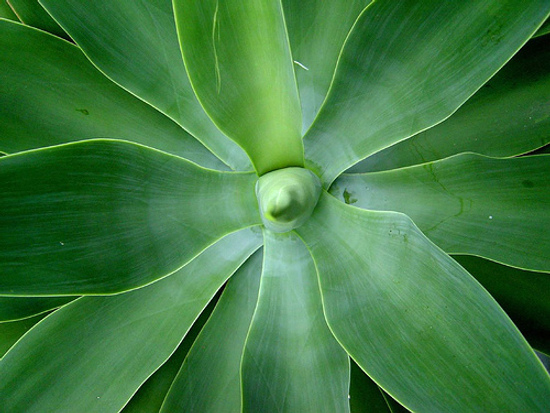
Agave plant
  But still, here's the problem with Agave. The information within public reach is extremely inconsistent.

  One place you might read that it IS indeed a health food, and a solid alternative to white sugar. That it takes your body longer to break Agave down.

  While other sources claim that it is no better than High Fructose Corn Syrup (or possibly worse), and the excess fructose in Agave increases the risk of metabolic syndrome, which can lead to brain shrinkage and mood instability.

  Google it quickly, and see the varying stories you get.

  With all the differing stories about Agave at our disposal, I wanted to pass along the new information I had become aware of. As always, knowledge is power! And since I had previously written that I used Agave, I wanted to issue an addendum of sorts. I don't want to provide bad information to my readers! 

What now?

  With Agave seemingly thrown out the window, I was back at square one. If I want to avoid refined white sugar, what is my best option?

  The best bet I have come across is Organic Cane Sugar. Again, I really only use sugar to sweeten my coffee. So if you are baking and are looking for another alternative, there might be a better solution.

  I have also come across people who rave about Beet Sugar. I personally have not used beet sugar, so I cannot speak of it one way or the other.

  If anything, we need to realize that no sweetener or sugar is a 'health food'! There is no magical sweetener that has zero calories, and won't harm our bodies in other ways. Sugar and other sweeteners should always be consumed in moderation, and is something we should always be mindful of. If you want something sweet, choose the calories NOT the chemicals!
 

LINKS:
Rodale: The 4 Best, and 3 Worst Sweeteners
Rodale: Food and Depression
Agave Nectar by Dr. Paul Gannon
Why is White Refined Sugar Unhealthy?
Agave Nectar: Good or Bad?

Wednesday, March 7, 2012

The Natural Food Label

Nothing natural about Cheetos.

  Labels, labels, labels -- they can be so confusing at the grocery store!

  We have 'USDA Organic', 'Natural', 'Gluten Free', 'Zero Trans Fats', 'Made with Real ...', 'Range Free', '100% Organic', and so on, and so on. And that's just the front of the box!

  So what do they all mean?

  Unfortunately, they're not easy to differentiate, or keep track of. The inclusion or exclusion of just one word, can make or break your 'healthy' purchases at the grocery store.

  Today, I'm going to tackle possibly the most-misleading, and most-useless label we have: 'Natural'.

  Anytime you see Natural on a food label -- in any capacity -- it doesn't mean a thing. The FDA has no definition, and no regulatory meaning for Natural. So whether the label says '100% Natural' or 'All Natural', it means the same thing: it's unregulated.

  In its description, the FDA says: "...it is difficult to define a food product that is ‘natural’ because the food has probably been processed and is no longer the product of the earth."

  Wow, no longer a product of the earth -- that's NOT natural.

  The ONLY time Natural has a meaning, is in regard to meat and poultry. But that definition isn't much clearer. The USDA has defined it as any product “containing no artificial ingredient or added color and is only minimally processed (a process which does not fundamentally alter the raw product).”

  What does 'minimally processed' mean? And that definition doesn’t address whether or not the animals given hormones or antibiotics, or raised in confinement.

Organic vs. Natural vs. Conventional.
  However, if the label says 'Naturally Raised' it means "no growth promoters, antibiotics, animal by-products, or fish by-products" we used on the animal.

  Confused yet?

  Two things are clear: natural certainly does NOT mean Organic, and it doesn't mean it's healthier either. So let's lose those assumptions right away.

  By the FDA's 'definition', High Fructose Corn Syrup can be labeled as natural. So what can be in/on foods, and still be considered
natural? Pesticides, fertilizers,
and Genetically Modified ingredients (GMOs) for starters.

  And guess what -- those foods with the Natural labels, more often than not, are more expensive than foods without any sort of labeling.

  If you're spending extra money buying Natural, make the jump completely, and buy Organic.

  Organic is the only way you can be certain the foods you're buying contain no artificial coloring/preservatives/flavors, GMOs, and weren't sprayed with fertilizers and pesticides. Otherwise, save your money and buy conventional.

  Conventional and natural foods are roughly the same junk anyways.

  The labeling situation in the US is a mess. We, as consumers, regularly play guessing games when purchasing food at the grocery store. There is too much uncertainty; too many meaningless labels. Marketers are taking advantage of people who are making an effort to eat more-healthily, but can't keep track of the ever-changing lingo.

  Hope I was able to clarify the uselessness of our 'Natural' food labels!


Pin It


LINKS:
FDA Meaning of 'Natural'
Misleading Food Labels
Food Politics: Natural Food Label
5 Sneaky Super Market Tricks
Certified Organic Label Guide

Friday, February 17, 2012

Arsenic in Organics


  Ok, parents here's something new to be on the lookout for. Articles released this morning by Food Safety News and various other news sources indicate that high levels of ARSENIC has been found in organic foods such as: baby formula, cereal bars, and energy shots. 

  Brown rice syrup, used in many organic foods as a sweetener, as a substitute for the increasingly-unpopular high fructose corn syrup, is the culprit. Also know as OBRS, a Dartmouth College research team found that these foods containing brown rice syrup have high levels of arsenic -- at rates well above the limits set by the Environmental Protection Agency for drinking water.

  At the present time, there are no regulatory limits on arsenic levels in food in the U.S. Findings such as these might indicate that some kind of regulation needs be set. In water, the EPA set the limit for public drinking water at 10 parts per billion (ppb) in 2001.

  After testing 17 infant formulas, 29 cereal bars and three different energy drinks, the team found levels significantly above the level established for public drinking water.

Organic Brown Rice Syrup is the culprit.
  Arsenic levels ranging from 23 to 128 ppb were found in cereal bars. One of the energy drinks registered at 84 ppm, and the two others hit 171 ppb. The infant formula came in at 8.6 ppb for dairy-based, and 21.4 ppb for soy-based.

  The two baby formulas that contained brown rice syrup had arsenic levels that were more than 20 times greater than each of the 15 formulas that didn’t contain brown rice syrup. These products were Baby’s Only Organic Dairy Toddler Formula and Baby’s Only Organic Soy Toddler Formula, both made by Nature’s One.

  High levels of arsenic exposure can raise a person’s risk for cancer and heart disease, and young children who ingest too much arsenic may suffer lower IQs and poorer intellectual function. It's obviously most-concerning in baby formula because many times, formula is the sole source of nutrition for infants, if they are not breast-fed.

  So once again, information is power. Let's continue to pay attention to what is being put into our food. And urge that the safety of the food being put on our shelves continue to be researched, and maybe more-importantly, regulated. 

  ~ Sabrina 

Pin It

Wednesday, February 8, 2012

Sugar and Artificial Sweeteners

Common artificial sweeteners.

  Sugar is the root of all diet-evils, isn't it? That MUST be the case since all we hear about is sugar-free this, and sugar-free that. We are told to avoid it wherever we can. Then we are shown the high obesity rates, rising cases of heart disease, and high occurrences of diabetes that sugar has caused in Americans.

  But here's the thing: Sugar alone is not the problem. TOO much sugar (and PROCESSED sugar) is the problem!

  So we run from real sugar, to artificial sweeteners. Splenda, saccharin, Equal, Sweet n'Low, aspartame; we've all tried them. And we think they're great. They have little-to-no calories, and they still make things taste great!
 
No Chemical Policy!
  Only one problem: they're ARTIFICIAL. Meaning, they're chemicals; not naturally occurring. And with these artificial sweeteners, Americans still are more obese than ever. So much for 'sugar-free' being the great diet savior.

   So here's a quick rundown on artificial sweeteners:

  -Aspartame: is the technical name for NutraSweet, Equal, Spoonful, and Equal-Measure. Aspartame is made of aspartic acid (act as neurotransmitters in the brain), phenylalanine (an amino acid normally found in the brain), and methanol (wood alcohol/poison). These 'ingredients' can cause birth defects, cancer, diabetes, emotional disorders, and seizures. So lets steer clear of Aspartame.

  -Saccharin: is the technical name for Sweet and Low, Sweet Twin, Sweet'N Low, and Necta Sweet. Initially saccharin was tested and shown to cause bladder tumors/cancer in lab rats, so it was required to sport the warning label: "Use of this product may be hazardous to your health. This product contains saccharin which has been determined to cause cancer in laboratory animals." The FDA since pulled the label when it was shown to cause cancer ONLY in rats. But researchers agree that in sufficient doses, saccharin is carcinogenic in humans as well. The question is, how do you know much saccharin your body can tolerate? That's not something I'm willing to risk, so lets stay away from saccharin too. 

  -Sucralose: also known as Splenda. The most-recent of the artificial sweeteners to hit the market, and has been touted as 'deriving from sugar'. However, it is processed using chlorine, and actually might have more scientifically in common with pesticides than with food. It has a zero calorie claim because once it reaches the gut, it goes largely unrecognized in the body as food. Splenda/sucralose is still too new to fully know it's effects on our bodies, but I think I'll avoid the chlorine. 

  -High Fructose Corn Syrup: also known as HFCS and/or Corn Sugar. Recent studies link HFCS to fatty liver disease, type 2 diabetes, and elevated risk of heart disease (because of increased LDL cholesterol, triglycerides, & a protein called apolipoprotein-B (which can cause plaque buildup in arteries) levels in the blood after consistent consumption). HFCS are metabolized ONLY by the liver (whereas naturally occurring sugar is metabolized by every cell in the body) which could explain the tie to liver and heart diseases. 

Chemicals versus calories.
Diet Soda, Not So 'Diet' After All 
  Before you roll your eyes at me, take one more thing into account: diet soda (which is sweetened with artificial sweeteners, of course) drinkers had a 70 percent increase in waist circumference over a 10-year study (by from the University of Texas Health Science Center), compared with those who didn't drink any soda at all.

  In a separate study conducted on mice, it was suggested that when your liver encounters too much glucose, the excess is converted to body fat. Diet soda: making us fat. Awesome.

  So now that I've ruined all your zero calorie fun, now what?

Real Sugar
  Let's not forget that sugar is naturally occurring in our world. One teaspoon of sugar has 14 calories in it. That's it! And where we get into trouble is having TOO much sugar, remember? Sugar consumption has tripled over the last 50 years.

  So let's forget the Big Gulp from 7-11 (whether it's diet soda, or not), or the Venti Mocha from Starbucks, and the boxed cookies from the grocery store. And let's get back having a well-balanced diet, and have naturally occurring forms of sugar in MODERATION. 

  I know, boring isn't it? But it's reality! If you're concerned about calories, don't resort to chemicals for the quick fix. And of course we're allowed to have treats and desserts! But remember, there's a huge difference between calories and chemicals! We should never be eating chemicals.

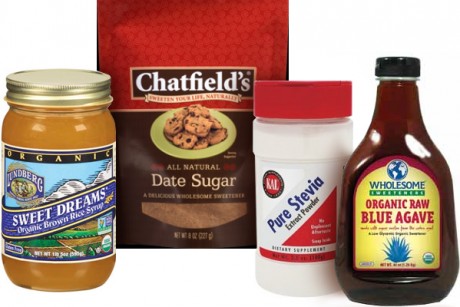
A few natural options.
  If you're still hesitant about table sugar (or insulin resistant/diabetic), there are some other natural options as well.

Other Sweeteners
  Raw honey and pure maple syrup, while still containing calories, are not going to harm you.

  There's also Agave (which I have used --but remain cautious about) and various sugar alcohols. They are naturally occurring, but break down more-slowly in the body (having a lower glycemic index).

  Stevia is plant-based, and contains zero calories. I have tried Stevia, but found it to have a very strong aftertaste. I have used it in baking, and thought it worked out okay.

  Finally, you can try organic cane sugar, which is what I currently use.

  Let's be clear, sugar can be cause for harm. But ONLY when we don't pay attention to the QUALITY of the sugar (artificial or not), and the QUANTITY of the sugar. We're all responsible adults here (is that a bad assumption to make?), so let's take control of what we choose to consume.

  It's my choice to never opt for chemicals. We can have REAL sugar in moderation, and then we won't have to worry about the calories, OR the chemicals.