Showing posts with label Rodale. Show all posts

Wednesday, November 14, 2012

Supermarket Sweep

 
  Between sneaky food labels and grocery store-tricks, navigating our way through the supermarket can be a difficult task.

  I think a lot of us are making the effort. We're reading labels, we're being conscious of the things we are buying at the store. Or at least we're trying.

  But how many times have you looked at a box at the store, and had no idea what you're looking for? No matter how much we talk about it, deciphering food labels is still confusing!

  Why? Because advertisers and food companies play on the health-buzzwords of the moment, and adjust their packaging and advertising accordingly. They're trying to sell their product, and make money. Period.

  I listened to a few podcasts recently that had some great information in regard to helping us decipher those tricky food labels, and navigate through supermarket traps. 

Food Label Tricks
  Whole foods, fruits, veggies, etc, are at the top of everyone's 'eat right' list. But we also know how convenient, and readily-available processed foods are. Here are a few pointers in distinguishing between healthy options, what may appear to be a healthy option. 

  • Local does NOT mean it's healthy
 - The phrase 'buy local' or 'locally produced' just means you're helping the environment because energy does not have to be used to ship products across the country/world. And buying local obviously benefits local farmers, who live in your own community. Since the food doesn't have to travel as far, nutrient content is greater because the fruits/veggies don't sit and oxidize. 

- Local does not mean Organic. At farmers' markets, don't presume just because they're LOCAL, that they're ORGANIC. Ask!! 
  •  Gluten Free foods are not health foods
When zero doesn't mean zero.
- Gluten free does NOT mean 'healthy'. Production of gluten free foods have exploded in recent years, but they should not be the latest health rage. Gluten free foods are for people who are ALLERGIC to gluten, and suffer from Celiac disease. If you don't have Celiac disease, you don't need to be eating gluten free foods. Many times, gluten free foods are higher in calories, have less fiber, and are more expensive! 
  • Trans Fat Labels
- We've all seen the label across the top of the bag of chips, or crackers: 'Zero Trans Fat'. But in actuality, there still can be up to a 1/2 gram of trans fat per serving. Most baked, packed goods (processed foods) purchased from the grocery store have trans fat. For example, a box of Ritz Crackers contains 14g of trans fat.

- Why all the hubbub over a half gram of trans fat? Studies show a strong link between consumption of trans fat and an increase in LDL (bad) cholesterol, heart disease, diabetes, obesity and depression. The American Heart Association says that we should have no more than TWO grams of trans fat per DAY. If just 3% of our daily calorie allowance comes from trans fat, we've increased our risk to develop heart disease by 23%.

Whole Grains, it says. We know better.
- The take home: stay away from processed foods and you'll steer clear of trans fat! If you see 'hydrogenated' ANYWHERE in the ingredients list, there's trans fat. Put it back on the shelf. 
  • Whole Grain/Whole Wheat Labels
- It needs to say '100% Whole Grain/Whole Wheat' NOT just 'Made with whole grain'. If it's 'made with' there can be just a fraction of actual whole grain used. 
  • Natural food label
- I did an entire blog last year on the Natural food label. It's completely unregulated, and honestly, doesn't mean a thing. Natural is no healthier than a product not labeled  'natural'. But it surely will cost more.

  For the food companies, it's all about making a profit. They will do all they can to keep their production costs down, all while telling us their product is healthier than the competition's. Even if that means playing on words, looking for loopholes, and tricking the consumer.

Click to enlarge.
Navigating the Supermarket
  There are two supermarket tips many of us have already heard. 1) Stay on the perimeter of the store -- because the refrigerated/produce sections are on the periphery; while processed foods are in the center aisles. And 2) Never go grocery shopping on an empty stomach.

  While those are helpful, the following tidbits are a little more specific, and hopefully will keep us on the right track!

  - Can you categorize the food into either a) Animal, b) Vegetable/Fruit or c) Mineral? For example, what is a chocolate chip cookie? Or a Cheeto? If you can't put it into one of those three categories, it's not food! It's chemicals and artificial ingredients, also known as, processed.

  - Make the cashier work! Things with bar codes = no. Those are processed foods. Things the cashier has to enter-in numerically = yes. That's produce.

  - Go with a gameplan. Don't buy things that aren't on your list.

  - Choose the shortest lines (obviously!). But studies have shown the longer you wait in line, where all those goodies are so nicely displayed, the more your will power is tempted, and the more-likely you are to buy those impulse items.

Navigating the supermarket can be tricky!
  - Invest in NUTRIENTS  not CALORIES. We complain that good food is costly. Instead of buying a bag of sweet potato chips or fries (at $3 a bag), buy sweet potatoes (at roughly $1 per pound). Broccoli instead of Cream of Broccoli soup. Buy strawberries instead of Smuckers jam. These options are 1) Less costly, 2) Less processed, and 3) More nutritious. Products in it's natural/original state are more healthful, and less expensive than when in the processed state.

  - Choose what you buy organically wisely. I've written previous blogs on the Dirty Dozen and the Clean 15. Produce that should always be bought organically (because of their thin skins, and the presence of pesticides and toxins on them), and produce that is okay to buy conventionally. Organic meat & dairy to avoid the anti-biotics and hormones.

  - Be wary of the natural food stores -- the Whole Foods of the worlds -- many times they grossly overcharge for certain products. Compare prices between markets. Sometimes Safeway has the same product for far less money. Pay attention, you'll be surprised!

  Do you  have any tips for avoiding supermarket tricks and money traps? Sharing is caring!

  Hope this was a helpful entry, at finding the true healthy buys, and keeping a few extra dollars from being thrown down the drain! 

LINKS:

Friday, May 4, 2012

Agave Addendum

Agave Nectar

  A couple months ago, I wrote an entry about sugar, artificial sweeteners, and possible alternatives to refined white sugar. My message in that particular blog was that real sugar isn't as evil as it's made out to be. It's how much of it we're consuming (many times, unknowingly). And it's too much of the fake stuff -- the processed sugars and sweeteners -- that get us into trouble. 

  That message hasn't changed, but I have an update on one of the possible alternatives.

  Almost immediately after pushing the 'publish' button on that blog in February, I received feedback about one of the alternatives: Agave (or Agave Nectar). 

  Even though I was a somewhat skeptical, I had started using Agave this Fall to sweeten my morning coffee. When I received feedback to look further into Agave, I did just that. And what I found resulted in immediately stopping my usage of Agave.

What is Agave Nectar?

  Agave is relatively new to mainstream markets, but it is definitely becoming more and more well-known. It's often touted as a 'health food' because it doesn't raise blood glucose levels in the same way refined white sugar does. I've also seen it advertised as natural and organic. Marketers call Agave a health food because it's considered a low-glycemic sweetener. Since Agave is very high in fructose (most consist of 70-80% fructose), it does not get absorbed into the blood stream as quickly as white sugar does.

  However, with further research, it seems that Agave Nectar is just as processed as High Fructose Corn Syrup (which is 55% fructose by comparison). So that debunks the claim that Agave is organic, natural or traditional.

  In fact, Agave and HFCS are made in the same manner: 
"using a highly chemical process with genetically modified enzymes. They are also using caustic acids, clarifiers, filtration chemicals and so forth in the conversion of agave starches into highly refined fructose inulin that is even higher in fructose content than high fructose corn syrup."
 What's the problem with fructose?

  Concentrated fructose isn't found anywhere in nature. Not even the sweetest of fruits. Fructose is a man-made sugar created by the refining process. Refined fructose doesn't contain any amino acids, vitamins, minerals, pectin, or fiber. As a result, the body doesn’t recognize refined fructose.

  Levulose is the naturally occurring sugar in fruits. It contains enzymes, vitamins, minerals, fiber, and fruit pectin.

  Refined fructose is processed in the body through the liver, and not digested in the intestine. Whereas levulose is digested in the intestine. This is a crucial factor to our bodies and digestive systems. Because fructose is digested in the liver, it is immediately turned into triglycerides or stored body fat. Since it doesn’t get converted to blood glucose like other sugars do, it doesn’t affect blood sugar levels in the same manner either. Hence the claim that it is safe for diabetics, and is a low-glycemic sweetener.

Who do we believe?

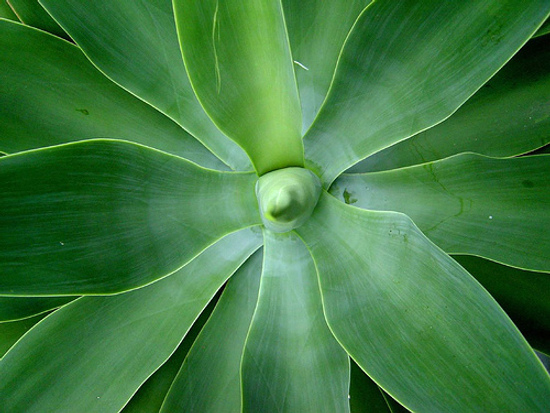
Agave plant
  But still, here's the problem with Agave. The information within public reach is extremely inconsistent.

  One place you might read that it IS indeed a health food, and a solid alternative to white sugar. That it takes your body longer to break Agave down.

  While other sources claim that it is no better than High Fructose Corn Syrup (or possibly worse), and the excess fructose in Agave increases the risk of metabolic syndrome, which can lead to brain shrinkage and mood instability.

  Google it quickly, and see the varying stories you get.

  With all the differing stories about Agave at our disposal, I wanted to pass along the new information I had become aware of. As always, knowledge is power! And since I had previously written that I used Agave, I wanted to issue an addendum of sorts. I don't want to provide bad information to my readers! 

What now?

  With Agave seemingly thrown out the window, I was back at square one. If I want to avoid refined white sugar, what is my best option?

  The best bet I have come across is Organic Cane Sugar. Again, I really only use sugar to sweeten my coffee. So if you are baking and are looking for another alternative, there might be a better solution.

  I have also come across people who rave about Beet Sugar. I personally have not used beet sugar, so I cannot speak of it one way or the other.

  If anything, we need to realize that no sweetener or sugar is a 'health food'! There is no magical sweetener that has zero calories, and won't harm our bodies in other ways. Sugar and other sweeteners should always be consumed in moderation, and is something we should always be mindful of. If you want something sweet, choose the calories NOT the chemicals!
 

LINKS:
Rodale: The 4 Best, and 3 Worst Sweeteners
Rodale: Food and Depression
Agave Nectar by Dr. Paul Gannon
Why is White Refined Sugar Unhealthy?
Agave Nectar: Good or Bad?

Wednesday, March 7, 2012

The Natural Food Label

Nothing natural about Cheetos.

  Labels, labels, labels -- they can be so confusing at the grocery store!

  We have 'USDA Organic', 'Natural', 'Gluten Free', 'Zero Trans Fats', 'Made with Real ...', 'Range Free', '100% Organic', and so on, and so on. And that's just the front of the box!

  So what do they all mean?

  Unfortunately, they're not easy to differentiate, or keep track of. The inclusion or exclusion of just one word, can make or break your 'healthy' purchases at the grocery store.

  Today, I'm going to tackle possibly the most-misleading, and most-useless label we have: 'Natural'.

  Anytime you see Natural on a food label -- in any capacity -- it doesn't mean a thing. The FDA has no definition, and no regulatory meaning for Natural. So whether the label says '100% Natural' or 'All Natural', it means the same thing: it's unregulated.

  In its description, the FDA says: "...it is difficult to define a food product that is ‘natural’ because the food has probably been processed and is no longer the product of the earth."

  Wow, no longer a product of the earth -- that's NOT natural.

  The ONLY time Natural has a meaning, is in regard to meat and poultry. But that definition isn't much clearer. The USDA has defined it as any product “containing no artificial ingredient or added color and is only minimally processed (a process which does not fundamentally alter the raw product).”

  What does 'minimally processed' mean? And that definition doesn’t address whether or not the animals given hormones or antibiotics, or raised in confinement.

Organic vs. Natural vs. Conventional.
  However, if the label says 'Naturally Raised' it means "no growth promoters, antibiotics, animal by-products, or fish by-products" we used on the animal.

  Confused yet?

  Two things are clear: natural certainly does NOT mean Organic, and it doesn't mean it's healthier either. So let's lose those assumptions right away.

  By the FDA's 'definition', High Fructose Corn Syrup can be labeled as natural. So what can be in/on foods, and still be considered
natural? Pesticides, fertilizers,
and Genetically Modified ingredients (GMOs) for starters.

  And guess what -- those foods with the Natural labels, more often than not, are more expensive than foods without any sort of labeling.

  If you're spending extra money buying Natural, make the jump completely, and buy Organic.

  Organic is the only way you can be certain the foods you're buying contain no artificial coloring/preservatives/flavors, GMOs, and weren't sprayed with fertilizers and pesticides. Otherwise, save your money and buy conventional.

  Conventional and natural foods are roughly the same junk anyways.

  The labeling situation in the US is a mess. We, as consumers, regularly play guessing games when purchasing food at the grocery store. There is too much uncertainty; too many meaningless labels. Marketers are taking advantage of people who are making an effort to eat more-healthily, but can't keep track of the ever-changing lingo.

  Hope I was able to clarify the uselessness of our 'Natural' food labels!


Pin It


LINKS:
FDA Meaning of 'Natural'
Misleading Food Labels
Food Politics: Natural Food Label
5 Sneaky Super Market Tricks
Certified Organic Label Guide

Wednesday, February 8, 2012

Sugar and Artificial Sweeteners

Common artificial sweeteners.

  Sugar is the root of all diet-evils, isn't it? That MUST be the case since all we hear about is sugar-free this, and sugar-free that. We are told to avoid it wherever we can. Then we are shown the high obesity rates, rising cases of heart disease, and high occurrences of diabetes that sugar has caused in Americans.

  But here's the thing: Sugar alone is not the problem. TOO much sugar (and PROCESSED sugar) is the problem!

  So we run from real sugar, to artificial sweeteners. Splenda, saccharin, Equal, Sweet n'Low, aspartame; we've all tried them. And we think they're great. They have little-to-no calories, and they still make things taste great!
 
No Chemical Policy!
  Only one problem: they're ARTIFICIAL. Meaning, they're chemicals; not naturally occurring. And with these artificial sweeteners, Americans still are more obese than ever. So much for 'sugar-free' being the great diet savior.

   So here's a quick rundown on artificial sweeteners:

  -Aspartame: is the technical name for NutraSweet, Equal, Spoonful, and Equal-Measure. Aspartame is made of aspartic acid (act as neurotransmitters in the brain), phenylalanine (an amino acid normally found in the brain), and methanol (wood alcohol/poison). These 'ingredients' can cause birth defects, cancer, diabetes, emotional disorders, and seizures. So lets steer clear of Aspartame.

  -Saccharin: is the technical name for Sweet and Low, Sweet Twin, Sweet'N Low, and Necta Sweet. Initially saccharin was tested and shown to cause bladder tumors/cancer in lab rats, so it was required to sport the warning label: "Use of this product may be hazardous to your health. This product contains saccharin which has been determined to cause cancer in laboratory animals." The FDA since pulled the label when it was shown to cause cancer ONLY in rats. But researchers agree that in sufficient doses, saccharin is carcinogenic in humans as well. The question is, how do you know much saccharin your body can tolerate? That's not something I'm willing to risk, so lets stay away from saccharin too. 

  -Sucralose: also known as Splenda. The most-recent of the artificial sweeteners to hit the market, and has been touted as 'deriving from sugar'. However, it is processed using chlorine, and actually might have more scientifically in common with pesticides than with food. It has a zero calorie claim because once it reaches the gut, it goes largely unrecognized in the body as food. Splenda/sucralose is still too new to fully know it's effects on our bodies, but I think I'll avoid the chlorine. 

  -High Fructose Corn Syrup: also known as HFCS and/or Corn Sugar. Recent studies link HFCS to fatty liver disease, type 2 diabetes, and elevated risk of heart disease (because of increased LDL cholesterol, triglycerides, & a protein called apolipoprotein-B (which can cause plaque buildup in arteries) levels in the blood after consistent consumption). HFCS are metabolized ONLY by the liver (whereas naturally occurring sugar is metabolized by every cell in the body) which could explain the tie to liver and heart diseases. 

Chemicals versus calories.
Diet Soda, Not So 'Diet' After All 
  Before you roll your eyes at me, take one more thing into account: diet soda (which is sweetened with artificial sweeteners, of course) drinkers had a 70 percent increase in waist circumference over a 10-year study (by from the University of Texas Health Science Center), compared with those who didn't drink any soda at all.

  In a separate study conducted on mice, it was suggested that when your liver encounters too much glucose, the excess is converted to body fat. Diet soda: making us fat. Awesome.

  So now that I've ruined all your zero calorie fun, now what?

Real Sugar
  Let's not forget that sugar is naturally occurring in our world. One teaspoon of sugar has 14 calories in it. That's it! And where we get into trouble is having TOO much sugar, remember? Sugar consumption has tripled over the last 50 years.

  So let's forget the Big Gulp from 7-11 (whether it's diet soda, or not), or the Venti Mocha from Starbucks, and the boxed cookies from the grocery store. And let's get back having a well-balanced diet, and have naturally occurring forms of sugar in MODERATION. 

  I know, boring isn't it? But it's reality! If you're concerned about calories, don't resort to chemicals for the quick fix. And of course we're allowed to have treats and desserts! But remember, there's a huge difference between calories and chemicals! We should never be eating chemicals.

A few natural options.
  If you're still hesitant about table sugar (or insulin resistant/diabetic), there are some other natural options as well.

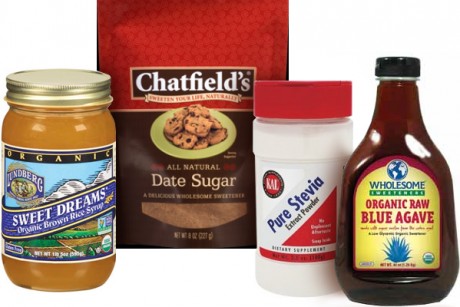
Other Sweeteners
  Raw honey and pure maple syrup, while still containing calories, are not going to harm you.

  There's also Agave (which I have used --but remain cautious about) and various sugar alcohols. They are naturally occurring, but break down more-slowly in the body (having a lower glycemic index).

  Stevia is plant-based, and contains zero calories. I have tried Stevia, but found it to have a very strong aftertaste. I have used it in baking, and thought it worked out okay.

  Finally, you can try organic cane sugar, which is what I currently use.

  Let's be clear, sugar can be cause for harm. But ONLY when we don't pay attention to the QUALITY of the sugar (artificial or not), and the QUANTITY of the sugar. We're all responsible adults here (is that a bad assumption to make?), so let's take control of what we choose to consume.

  It's my choice to never opt for chemicals. We can have REAL sugar in moderation, and then we won't have to worry about the calories, OR the chemicals.


Friday, November 18, 2011

Why the Farm Bill Deserves Our Attention

Food Democracy Now!
 
  Every five years, Congress restructures the Farm Bill. And it's up for renewal in 2012. Now before you tune out and move on, consider this: if you eat food, the Farm Bill deserves your attention.

  The term 'Farm Bill' downplays the influence it has on all of our lives. It has much more to do with each of our everyday lives than we might think. Sure, it's an important piece of legislation that greatly affects farmers, but also impacts food consumers from the countryside to big cities, and everywhere in between. Some people suggest it should be renamed the 'Food and Farm Bill'.

  Now what exactly is the Farm Bill? It is a collection of legislative food and farm acts that is renewed every five years. The last time it was enacted, in 2008, the Farm Bill represented $284 billion of the federal budget at that time. It,
"sets priorities and provides funding for everything from crop subsidies, farmland preservation, international food aid and exports, nutrition entitlements (such as food stamps), lending to farms, rural infrastructure investment, research, forest protection and restoration, energy promotion (think bio-fuels and ethanol), organic agriculture, livestock, crop insurance and disaster assistance, and commodities trading."
So as you can see, the Farm Bill is a pretty wide-spread umbrella. It isn't just about farms and farming.

  Usually, writing a new farm bill takes about a year or so. Stakeholders from all facets of the food supply are given opportunity to have their voice heard, by providing testimony to House and Senate Agricultural Committees. The funding and direction of the bill is put together after all information is considered, and finally the bill is voted on by both legislative bodies. That's how the democratic process should work, right?

  So what makes the 2012 version of the Farm Bill so different? Well, it appears that legislators are trying to rush the Farm Bill though using a secret committee that is out of the public eye. This is all somewhat tied to the 2011 Budget crisis where a Super Committee was assigned the task of cutting $1.3 Trillion from the budget by the fall.

  The Super Committee tasked the Agricultural Committee to propose $23 billion in cuts to the Farm Bill legislation. Just four committee members are meeting behind closed doors to decide on those cuts, thus stealing any chance for reform to occur in regards to local, organic and healthy food until the next Farm Bill comes up in 2017.

  We all know that if this legislation is allowed to be written without the influence from the people, lobbyists and Big Agriculture will win out (or have I just become that cynical??). And the interests of companies like Monsanto, Cargill, and ADM will continue to be protected, further damaging our food system/supply.

  We can't allow that to happen.

  If we want any progress to be made within our food supply, the time is now. We can't wait until 2017. If we can, we want the government to cut farm subsidies for the 'big farm' and enact agriculture reforms that would create jobs, clean up the environment, strengthen sustainable local food systems and make healthy food available to everyone.

  That all starts with writing an open and fair Farm Bill.

  So what can we do? Go to Kill the Secret Farm Bill and let the members of the Agricultural Committee know, we want our voice heard in regard to the Farm Bill!

  Long story short, we can't cut corners on this legislative process. The Food Bill is a discussion that needs to be in the public. After all, this is a Congress that just declared pizza a vegetable. I think they've proven they need a little assistance where food is concerned.

  Have a great weekend! ~ Sabrina


LINKS:
Kill the Secret Farm Bill (Food Democracy Now)
Stop the Secret Farm Bill 
The Secret Farm Bill
Why the Farm Bill Matters

Thursday, November 3, 2011

GMOs - What Can We Do?


  Here we are...back to GMOs! You didn't think I was done calling-out the American food supply, did you?

  First I told you what GMOs were. Then I told you how they negatively effect our health, and our environment.

  So now, what can we do to identify them in the grocery store and more importantly, avoid them?

GMOs & Their Effects
  But first here's a QUICK recap: GMOs are Genetically Modified Organisms. They are organisms (seeds, plants, animals) whose genetic material has been altered from its natural state. DNA molecules are combined with different sources to create a new set of genes, and essentially a new organism.

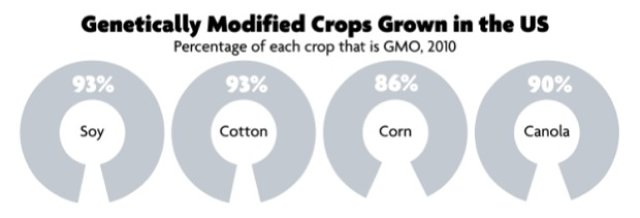
  The US food supply is full of GMOs, but they are most prevalent in corn and soy crops. Unfortunately for us, corn and soy is found in virtually everything these days!

  And while the effects on our health (rise in infertility, obesity, Diabetes, Autism, Parkinson's, asthma, cancer, etc rates) cannot yet be directly linked to GMOs, they haven't been proven safe either.
 
  In 2009, the American Academy of Environmental Medicine publicly condemned GMOs in our food supply. Saying GMOs posed 'a serious health risk.' They also asked the U.S. government to implement an immediate moratorium on all GMO foods, and urged physicians to prescribe non-GMO diets.

GMOs have infiltrated our food supply!
  Personally speaking, I'm not going to wait for the government to tell me they're unsafe. The long term consequences of GMOs on our health and environment have NOT been adequately researched. Since learning how potentially harmful GMOs are to our health and environment, I quickly became determined to avoid them at all costs. So what do we look for?

How Do We Identify Genetically Modified Foods?
  Since GMO foods are not labeled in the US (like they are required to be in over 40 countries worldwide), identifying them can be somewhat difficult. But it's not impossible. All it takes is a little diligence on the part of the consumer!

Non-GMO Project seal.
  Keep in mind that roughly 80% of packaged foods in the U.S. contain GMO ingredients.

  First and foremost, when buying processed/packaged goods, look for the Non-GMO Project verified seal. Products with this seal have undergone independent third-party testing to ensure they have been made to best avoid GMO ingredients. So this is a helpful tool.

  The second thing you must do when buying processed foods is look at the ingredients list! Avoid at-risk ingredients (the big 4): corn, soybean, canola, and cottonseed products. Okay, this is nearly impossible, so let's move onto step three.

Pick & Choose When to Buy Organic -- the Dirty Dozen & Clean 15
  When buying fruits and vegetables it's a whole different ballgame. Federal researchers found that certain types of organic produce can reduce the amount of toxins we consume on a daily basis by as much as 80%!

  The "Dirty Dozen" is a list of produce that contain the highest amount of chemicals, and should ALWAYS be bought organically.

  When 'conventionally' grown (non-organic, with chemicals), these fruits and vegetables tested positive for at least 47 different chemicals, with some testing positive for as many as 67. Those numbers are frightening if you ask me!

  Do we really want those pesticides in our bodies? Here are the Dirty Dozen: Apples, Celery, Peaches, Strawberries, Domestic blueberries, Nectarines, Sweet bell peppers. Spinach, Kale and Collard greens, Cherries, Potatoes, Imported grapes, and Lettuce.

  I know buying Organic produce can get expensive. So there's also a "Clean 15" that lists fruits and vegetables that have little to no traces of pesticides when grown 'conventionally' (non-organically).

  The Clean 15 are: Onions, Avocados, Sweet corn, Pineapples, Mango, Sweet peas, Asparagus, Kiwi fruit, Cabbage, Eggplant, Cantaloupe, Watermelon, Grapefruit, Sweet potatoes, and Sweet onions.

   By keeping these two lists in mind, you can avoid a great deal of harmful and unnecessary chemicals! In my opinion, it's best to have a "No Chemical Policy." Since when is it okay to consume chemicals?

Just Label It!
Demand GMOs Be Labeled  
  The last thing we, as consumers can do, is continue to push our government to label GMO foods. We need to make these harmful foods more-easily identifiable in the grocery store!

  As I mentioned before, over 40 countries worldwide label modified foods, so why is the US so far behind?

  The Center for Food Safety recently started the Just Label It campaign. The CFS has petitioned the FDA demanding it require the labeling of modified foods. Go sign it! This link will send your comment/request to the FDA and President Obama.

  While it may be difficult, and somewhat time-consuming, I encourage you to be diligent on your own, and pay attention to what is in your food! A chemical is never a good thing to put in our bodies.

  After all, we only get one of them! Be mindful of how we are treating it!


  RELATED POSTS:

 LINKS:

Tuesday, September 27, 2011

The Effects of GMOs

Genetically Modified salmon vs. 'organic' salmon.

  Now, I'm not a doctor or a scientist (obviously!). But I've become curious enough, and diligent enough to seek out information as to why so many friends, and friends of friends, were facing so many bouts with cancer.

  And as it turns out, after doing some reading and a lot of listening, cancer isn't the only result of the 'chemicalization' of our world.

  I'm sure it's not as simple as I'm making it out to be, but the obvious can no longer be ignored.

  I described what GMOs were in an entry last week (Do You Know What GMOs Are?). And as I said then, GMOs are found EVERYWHERE. It's estimated that 80% of processed foods contain genetically engineered ingredients.

  Here are some of the potential effects:

  In 1996, GMOs were widely introduced in the US. Nine years later, chronic diseases nearly doubled, and food allergies, Autism, Diabetes, asthma, obesity, Parkinson's, cancer and infertility rates exploded.

  They exploded in the US, while staying at relatively the same levels in countries where GMOs are banned or labeled. 40 countries around the world have either banned, or have plans to ban GMOs. In the US, they aren't even regulated.

  Before you ask, where's the proof, let me provide you an alarming piece of information. Read it. Seriously. According to the Center for Food Safety:
“a number of studies over the past decade have revealed that genetically engineered foods can pose serious risks to humans, domesticated animals, wildlife and the environment. Human health effects can include higher risks of toxicity, allergenicity, antibiotic resistance, immune-suppression and cancer."
An example of the effect of GMOs on Diabetes rates.

  Those are the effects on OUR health. What about the environment's?

Pollution: From Farm to Stream to River to Ocean
  The manufacturing, transportation, and use of chemicals for agriculture are poisonous to all things that come into contact with them. And many chemicals don't biodegrade, they last forever.

  By using 'Round-Up Ready' corn or soy seeds from Monsanto, and then spraying toxic chemicals and pesticides onto the crops, we are starting the pollution at the farm level. The run off from the farm, to the stream, to the river, and finally into the ocean suffocates sea life, and causes dead zones to grow, and water wells to be contaminated.

Illustration of the Dead Zone areas in the Gulf.
  If that weren't enough, another environmental effect of using GMO crops is that we are killing the earth's soil. That in turn, accelerates our global warming problem.

Soil Degradation
  'Healthy' soil is alive. It is made up of millions of micro-organisms that are responsible for trapping green-house gasses (carbon), that helps clean our air. When we spray pesticides onto the crop/soil, we are killing those micro-organisms which allows more green-house gasses to remain in our air.

  Yet another effect is that nutrients found in living soil are decreasing. Plants obviously get nutrients from the soil, so the plants are not getting the same nutrients as they once did. As a result, our fruits and vegetables are nutrient deficient, so WE are getting fewer nutrients from our food.

  But wait, there's more. Since the soil is dying, it is necessary for farmers to spray EVEN MORE chemicals (synthetic fertilizer that has ammonia in it) onto the crops to aid its growth. Again, creating the run off contamination into our rivers and oceans (while also poisoning our food even further).

A Harmful Cycle
  You see, it's a dirty cycle. And the only ones that are seeing the benefits are the seed/chemical companies (which are usually one and the same, i.e. Monsanto). They continue to become more and more powerful, and see record profits year after year.

  The domino effect of GMOs and chemical farming was a shocking one to me. Until this past year, I had never thought that our food was doing us harm.

  We should be able to trust the foods that are in our grocery stores, not be suspicious and skeptical of it. And I had never realized that so much harm was being done to not only human health, but to the health of our environment too.

  The next time I tackle the world of GMOs, I'll get into ways we can be on the lookout for them. How can we identify them, and avoid them? I hope you come back for more!


LINKS:

Tuesday, September 20, 2011

Do You Know What GMOs Are?

 
  You may or may not have heard about them. But GMOs have become quite the hot topic over the past couple of years in regard to the food supply in the US.

  In short, GMOs are Genetically Modified Organisms. Great, so what does that mean?

  It's an organism (seed, plant, animal, you get the idea) whose genetic material has been altered from its natural state.

  It's combining DNA molecules from different sources to create a new set of genes, and essentially a new organism. It's playing God with the genetics of plants and animals. Does that sound like something that should be going on with our food?

Round-Up Ready Seeds
  The most commonly seen GMOs come in the form of agricultural crops. In the mid-1990s, a company called Monsanto first patented corn seeds and soy beans to withstand the affects of herbicides and pesticides. Essentially, they put herbicide and pesticide into the seeds. They call them 'Round-Up Ready' seeds.

  In theory, it sounds like a great idea. Why not make farmers' lives easier by helping them create a farm that doesn't need to be weeded? But here's the reality: not only is our food covered in chemicals, but now chemicals are inside our food.

  Today, 15-20 years after they were first introduced, it is becoming more and more clear that GMOs have become a very harmful monster in our world. Bringing these chemicals into our food supply has had repercussions that we never expected. The effects have harmed our health, our environment, our land, and ocean life.

  I'll dive deeper into these effects a later post.

Avoiding GMOs is a Difficult Task
  You might think: okay, so just avoid corn and soy, and there's no problem. Wrong. Unfortunately GMO corn and soy are in EVERYTHING.

  Everything that is processed, that is. Look on the ingredients on any box you pick up in the store, and I can almost guarantee that either corn or soy is listed.

Altering Animals

  A genetically modified animal is just as problematic. Everyone wants a bigger, fatter cow, right?!? So lets make that cow (or chicken, pig, etc) grow that much bigger/faster by giving them hormones.

  When it grows too quickly, or becomes too heavy for its bones (that weren't meant to support the modified, larger-version), the cow gets sick. So to prevent it from becoming sick, farm animals are given anti-biotics. Those anti-biotics (don't forget about the hormones too) are then ingested by the human that eats that farm animal.

  Now can't you see how dangerous GMOs might be?  I'm going to write more and more about GMOs, their ramifications, what we can do, and how we can avoid them in the near future.

What Foods Have GMOs in Them?
  Here are the most prevalent offenders:

       -milk (dairy products)
       -cooking oils (corn, soybean, cottonseed, and canola oils produced in North America)
       -animal products
       -sugar & artificial sweeteners
       -cereals
       -fruits & vegetables
       -crackers & chips

  Like I said, GMOs are EVERYWHERE! The only way to ensure that you're not consuming a GMO food, is to find organic alternatives.

  I'm not writing this to scare anyone, I just want to share the information I've come across in the last six months. It's made a great impact on me, and it has changed the way I eat and live my life (for the better, I believe).

  I find the whole process to be very interesting (and disturbing), and I think it is affecting us more than we know.

  Hope you'll stay tuned!


LINKS:
Rodale
Jillian Michaels Podcast - 3/25/2011 & 4/29/2011
Organic Manifesto
6 GMO Foods to Avoid