Showing posts with label Injury prevention. Show all posts

Friday, January 18, 2013

Foods That Heal

So many years on the court has made for sore joints!

  Achy knees? Sore ankles? Yeah, me too.

  After years and years and years of constant pounding, running, and cutting, my joints are starting to get a little angry at me. I'm actually a tad surprised it took this long.

  Being somewhat crippled (I say that jokingly now) as I grow older has always been in the back of my mind. But running, jumping, cutting, all in all: abusing my body, is part of the job. There's no way around it. I'm just trying not to let 'somewhat crippled' become a reality.

  This season, for the first time ever, I've had sore knees. And more often than not, I wake up to ankles that take a few minutes to warm up when I first jump out of bed in the morning.

  My question is this: can I stop it?

  I'm a person who, no matter how long my career as a basketball player lasts, will always be active. I've blogged about how much I enjoy running. And working out, and being active on a daily basis will always be a part of my lifestyle. Not doing anything isn't an option.

I may need more than the occasional physio tape.
  Sure, I can adjust. I can swim, I can bike. I can do lower-impact activities. But I don't enjoy them nearly as much.

  Outside of changing my activities, what can I do?

No Drugs
  I don't like taking pills. Whether it's over-the-counter medication or prescription, taking pills is my last resort -- only in extreme situations. They are extremely hard on our bodies, and only mask the under-lying issue. I have a future blog on NSAIDs -- Advil, Aleve, etc -- in the works, to explain why I'd rather not take pills. But that's for another day.

  We know how to aid our muscles' recovery, but what about our joints'? I'm trying to find other solutions. Solutions that are easier on our bodies than pills.  

Tart Cherry Juice
  Tart Cherry Juice affects the body's ability to recover from strenuous activity. Mostly, it aids the body in muscle repair after exercise and strength training. Because the juice also has notable anti-inflammatory capabilities, it can alleviate joint pain (due to arthritis, gout, and I'm hoping, over-use).

  A study done on Hood to Coast (a 196-mile relay in Oregon) reported that runners experienced significantly less pain after the race if they drank tart cherry juice in the week leading up to the race.

  Other tart cherry juice benefits: it's very high in anti-oxidants -- including the heavy-hitter Quercetin (see below), and it's a natural source of melatonin, so it may help you sleep more-peacefully!

  Dosage: Eight to 12 ounces, twice per day (the equivalent of 100 tart, or Montmorency, cherries per day).

What I loaded up on during Christmas.
  One downfall: The stuff is a little pricey. Make sure it's 100% tart cherry juice or concentrate! When I first looked for it at the store this summer, I found watered-down, or other juice-mixers, were easier to find (and easier on the wallet!). So if you're looking for the benefits, make sure it's 100% tart cherry!

  If you're curious, sweet cherries have not been shown to have the same effect.

  I tried tart cherry juice on occasion this past summer. But I didn't drink it often enough to really decide if it was anything that was of benefit to me. Since my knees and ankles were achy the first half of the season, I thought I'd give it a try during the second half of the season. So, I came back to France with a couple bottles of tart cherry juice concentrate.

  I will be diligent in the dosage, and let you know what I think!

Healing Foods
  We can help heal ourselves with food instead of pills. Believe it or not, our diets can provide a lot of healing powers. Even when injured, what we eat can actually get us back on our feet sooner rather than later!

  Here are a few easy ways to adjust our diets:

  Foods can hurt us, or they can help us. Instead of opening up the medicine cabinet, let's give our food a chance to be our medicine.

  As always, if you have any tips or tricks, I'd love to hear them!

 LINKS:

Friday, December 14, 2012

The Injury Treatment

In a physical game, there are bound to be injuries!

  Injuries are a part of athletics. Unfortunately, over the course of a long season (and an even longer career) they are very difficult to avoid. Whether it's a major injury, or minor bumps and bruises, eventually there will be something you need to give extra attention to, and potentially miss a practice or game for.

  I've had my fair share of bumps and bruises, and a few major injuries along the way. So I thought it might be interesting to think back on the differences in how injuries/illnesses are treated in the various countries I've played in, including the US. 

Inner Voice vs. Outside Voices
  As a competitor, you always have that voice inside of you, urging you to get back on the court. But sometimes that voice is too eager. It's during those moments where it's important to have professionals around you, who you trust, advising you.

  Another aspect is the attitude the people around you have towards injuries/illnesses. What sorts of things are you hearing from management, coaches, fans, etc as you prepare for games? You may get pressures and feelings from influential people that don't necessarily match up with the feelings of the medical staff.

No foul.
  There's nothing worse than feeling you aren't doing what's best for the team, that your personal heath isn't important, or having your toughness questioned.

  For me, some seasons have been more injury-riddled than others. So sometimes you get a little too-familiar with the medical system, and while they're usually great people, get to know your team physio too-well.

  I've always had great medical staffs take care of me and my teammates. From college, and throughout my time in Europe as a pro. I think I've learned something valuable about my body, and how it 'works' from each and every one of them. So I thank you for that!

Ice or Heat?
  One of the most-diverging thoughts between treatment in the US and in Europe has to do with whether to ice or heat an injury. In the US, we ice everything, at all times. In Europe, you will only hear your doctor or trainer tell you to ice if it's within 48 hours of sustaining an injury. Anytime after that, they will tell you to use heat.

  As an American, my first inclination has always been to ice. It took me several years to break that mentality. Now, I think: what am I about to do? If it's to prepare for a practice or game, I heat. If it's after a workout, practice, or game, I ice. You want warm, loose muscles as you prepare to play. And after playing, you might have some aches and pains that icing will help.

Treating the Pain versus Treating the Problem
  After 10 years in Europe, I've found there is a second vastly different treatment belief. I think the people I've worked with in Europe are more concerned with your individual body structure, why something is causing you pain, and how they can cause the pain to stop. They then work with you either through exercise/rehab, or manipulating/adjustment to hopefully make a more-permanent structural change.

  I think in the US we treat the pain first and foremost. Instead of treating what's the root of the problem and what's causing the pain, the why am I feeling pain? We are too quick to ask, how can I cover up the pain, by taking this pill, or getting that shot.

Getting my broken finger attended to.
  After thinking that way for a long time, I am now 100% anti-pill, and anti-shot. We feel pain for a reason. Masking it, does not help. If I have pain, I want to be able to feel it, and make a decision from there.

  I've clearly just made a gross generalization. But it's my personal belief based on my experiences. I obviously have a lot more experiences in Europe, especially as of late. Of course, there are medical professionals in both the US and Europe that don't fit either mold I have just put them into.

Elevated Heart Rate 
  A third difference comes before you ever step foot onto the court. In Europe, you're required to pass a physical before you can compete for your team (it's usually written into your contract).

  Those physicals include an EKG, observing your heart both at rest, and with an elevated heart rate. Since that is what basketball consists of, competing with a raised heart rate, the doctors want to ensure you are fit to do so.

  In the US, I never had my heart tested at an elevated level (that I remember). That practice may have changed in the 10 years I've been competing in Europe, however.

  Here are a few specifics about some of the places I've played: 

Italy - We had a doctor who came on occasion, and a trainer who was at every practice. It was my first experience as a pro, and I quickly learned that it was up to you to get yourself taken care of. They weren't going to check up on you, or make you come in for treatment. You'd just better make sure you were ready to practice and play.

  I didn't have any injury or illness that caused me to miss time during my two seasons in Italy.

Poland - No team doctor. Trainer/massage therapist who was very attentive. I didn't have any issues that caused me to miss practice or game time.

Poland.
Bosnia - No team doctor, no physio/trainer present at practice. I had a horrible ankle injury in a game in November. The doctor put a cast on me, and said to come back in a several weeks. No rehab, no exercises, nothing.

  After a week of listening to him, I cut the cast off myself because I knew I needed to be doing rehab exercises, and using my leg muscles, if I wanted to come back and play in a reasonable amount of time.

  After another week or so, the doctor wanted to put another cast on me. So I told the team I needed to go home and get it taken care of. I did just that. I didn't play competitively until the following season.

Sweden - No team doctor, no physio/trainer present at practice. We had access to a great physio when treatment was needed. I found that less importance was placed on massage therapy, and more on exercise and rehab exercises.

  If you were sick, even just a little, you did not practice or play.

Germany - No team doctor, no physio/trainer present at practice. I had various injuries in Germany, and two AWESOME physios to take care of me.

  I had a foot injury that caused me to miss almost a month of practices and games. After a few games, and the team started to lose, I felt pressure to play from management; that I needed to play, no matter what.

  With illness, if you were on antibiotics, they told you not to practice.

France - Team physio present for games, but not practice, and access to physio/team doctor throughout the week. I think out of all the countries I've played in, the French are the most-cautious. They are very quick to hold you out of practice for something I would consider minor.

Trust
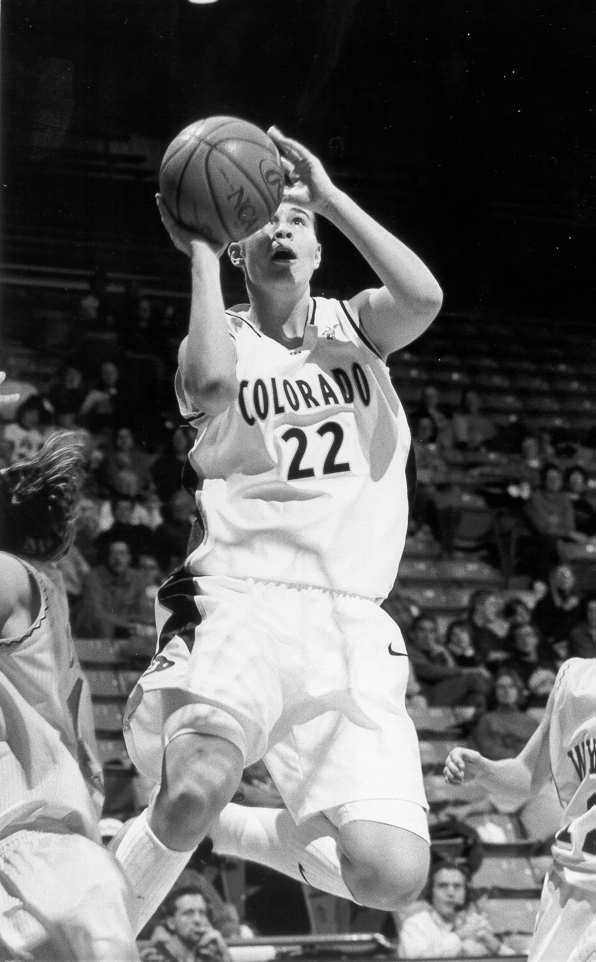
Playing days at CU.
  I think it's important to understand that trainers and doctors are employed by your team. Their job is to get you on the court. And your job is to be on the court. You can imagine that those unified attitudes can get you into trouble on occasion, and you push a little too hard.

  That's where trust comes into play. You have to trust yourself and your body, first and foremost. And you have to trust that your trainer/doctor has your best interest at heart, that they pay no mind to the pressures of winning or losing one particular game.

  I've said it many times before: when it comes down to it, my job is to be ready to play on game day. That may include resting a time or two during the week, to allow those aches and pains to heal up. But I've found that the most important thing to do is to listen to your body!

Your Health First
  As my career has progressed, I have taken on a different attitude towards injuries. Before, I would play at all costs. Maybe I thought I was invincible, and could play through anything. Now, not so much. I am very cognizant about long term implications and effects from playing through injuries. I think that mentality changed about three or four years ago for me.

Always playing with contact.
  And not that I question trainers, doctors, physios now, but if I don't feel comfortable with treatment, or how something feels, I won't hesitate to speak up. Whereas earlier in my career, I would have taken everything at face value, unquestioned for the most part.

  I think that comes from learning more and more about my body each and every year, knowing myself, and truly wanting to do what's best for my health. Instead of years before, where my only concern was: 'what's the quickest way I can get back on the court?'

  Having supportive people, both in management and on the medical staff, is really important when trying to overcome injuries or illnesses, no matter their severity. Having a united front, where everyone believes in the methods, is beneficial to everyone.

  Again, thanks to the many trainers, physios, and doctors who have helped keep me healthy! It really is a team effort.
P.S. I'm knocking on wood throughout this entire blog.

Monday, March 5, 2012

What the Body Says, Goes

2010-2011 season in Sweden.

  It's like it knew I was talking about it, and wanted to let me know EXACTLY who was in charge...

  On Friday I wrote about how I typically go about making my decision on whether I will play another basketball season abroad as a pro.

  Atop that list, is a heavy dependence on how my body feels, and if I feel I am healthy enough to play another physically demanding season.

  As an athlete, you're always going to have aches and pain, and bumps and bruises. But you quickly learn to decipher one from the other. What you can play through, and what needs more attention. There's an enormous difference between playing hurt and playing injured.

Playing Injured vs. Playing Hurt
  Playing injured is never a smart idea, in my opinion. An injury, of any kind, demands immediate attention, and requires you to take a break to let your body heal. On the other hand, I think everyone has played hurt at one point or another. You wake up with a stiff back, or your foot doesn't feel quite right. So you warm-up a little bit more-gingerly, and before you know it, you're feeling normal.

NCAA Tourney -- Elite 8 versus Oklahoma.
  As your career progresses (at least this has been my experience), your body develops its habitual injuries. They're the things that you always have to keep in mind, and be aware of.

  They've probably been nagging you off and on for years. But when it comes down to it, they're the things that always seem to be the culprit when it comes to keeping you off the court.

My Constant: My Back
  For some basketball players, it might be their knees. Since my college days, it's always been my back. Nine times out of 10, if I'm on the sideline, it's going to be because of my back.

  I had surgery on it when I was 20 because of herniated discs. It was a scary thing. Lots and lots of back pain, and leg numbness. Not normal for a 20 year old, is it? But thankfully, I felt immediate relief after the surgery, and slowly made my way back to the court.

  Dealing with my back has been a learning experience. I've learned a lot about what my body can and cannot do. Things that help my body excel, and the things that drag me down. I am very cautious about trying out new exercises or movements that I feel might expose by back, and cause any injury.

  I think because of the precautions I take, and the extra exercises I do (lots of stretching and core-strengthening), I have been able to keep my back relatively healthy during my career as a professional.

This season vs. Le Havre.
  But sometimes you can't help it. Things happen on the court -- you're bound to tweak it every once in a while. And that's exactly what happened with me over weekend. I felt a slight twinge in practice on Thursday, got treatment on Friday, and thought I'd be ready to go for our game on Saturday night (March 3rd). My body had other ideas however. And that's where you have listen to what it is saying.

Your Body is Boss
  Your mind can think one way, but your body might have a whole different plan. Sad to say, but you can't will your body to being able to play.

  It's a sobering thing, as an athlete, to have your body fail you. You can work all you want to prepare, but sometimes it's just not in the cards for you to be out on the court.

NCAA Tourney vs. North Carolina
  In my younger days, I might have tried to give it a go, and struggled though a painfully (in more ways than one) bad game. I've been there before, but I know better now.

  While I love basketball with all my heart, I realize it is a game, and pain is there for a reason. Not being able to play freely (injured) is no fun. In fact it's down right miserable, and that's one thing I will never do again.

  So I had to sit out our game versus Pleyber-Christ. It's always difficult to be on the sidelines, watching your team. You feel a little helpless. So all you can do is cheer your teammates on, and hope for the best. But sometimes you just have to listen to your body, and let things rest.

  Thanks for the reminder, body (not that I needed it)! You indeed DO call the shots! (by the way, I'm feeling better -- should be back on the court in a couple days!)

                Pin It

Thursday, November 10, 2011

Recovery Methods: When Working Out Turns Into Pain

CU Buffs - Fall 2002.

  We've all woken up with sore muscles at some point in our lives.

  Maybe we got a little carried away at the gym, pulled a few too many weeds in the yard, played in an intense basketball game, or maybe we just took too long of a break from doing much of anything!

  Regardless of how they happen, sore muscles are a part of the 'game'. But when it does happen, how can we speed up the recovery process?

  For me, rolling out of bed is something like a roll call: How's the back? How are the feet? How's the ankle? And so on. Aches and pains are a given in my world. But it's learning how to manage the sore muscles, and recover more-quickly, that enables me to get back out there, and go just as hard the next day.

  Train hard, recover hard.

Recovering vs. Resting
  Some might think 'recovering' is just doing nothing. No, that's called resting, and I'll talk about that later.

  Why is it necessary to recover? Think of 'exercise as the architect, and recovery as the builder.' You do damage to your muscles, and break them down when you exercise, and recovery is where the progress is made.

  After a workout, your body needs to repair itself. Whether you're preparing for your next training session, or just trying to feel better, recovery is an essential part of training.

  Your body repairs itself when blood vessels bring oxygen to your muscle tissue, all the while removing built-up lactic acid. Too much lactic acid can cause your muscles to function poorly and will often lead to fatigue.

Stretching is crucial!
  A little soreness is always a good feeling, I think, at least (but I might be crazy). It lets me know that my body is really working, and I'm working hard.

  But too much soreness? Now, that's just uncomfortable. So here are some things we can do to make those sore muscles feel better a little bit quicker!

Recovery Methods
  First and foremost, stretching is key! In my younger days, I'd always laugh at the older (ahem, more experienced) players stretching after practice. Now, I can't imagine not stretching. I always try to stretch after a workout or practice, even if it's just for five minutes.

  Everyone can stretch. You don't need anything special, just a little commitment to your body!

  Secondly, you need to eat! They call it the 'Golden Hour' after exercising: eating within an hour after your training session. It's important to have a little carbohydrate, and a little protein. You also need to replenish amino acids and electrolytes (potassium and magnesium) after training as you lose electrolytes when you sweat.

  This may all sound a bit confusing, so let's make it easy: I like to have a whey (not soy!!) protein shake after a tough workout, and mix it with fresh fruit like strawberries, blueberries, and a banana. But if you want to make it even easier, stick with a banana, a TBSP of peanut butter, and a little Gatorade.

  The first two methods, everyone can do. You just a little discipline and diligence. It will help you get the most out of your workout, and help your body feel better in the long run!

  The following methods require a little extra effort, and sometimes, a few extra dollars:
 
Ahhhhh.
  Who doesn't love a massage every so often? Sure, they can be a little painful at times, but afterwards you feel like a million bucks! There are countless types of massage practices, but they all have the same effects.

  Massage increases blood flow, which helps repair muscle damage, releases lactic acid, and also increases flexibility and range of motion in joints. Massage obviously also loosens tight muscles and helps to dissipate soreness more quickly. Massage has also been shown to make the body less susceptible to injury (tight, rigid and fatigued muscles can make injury a more common occurrence).

  Massage, however, can get expensive. That's the one drawback. There is a method of self-massage using a foam roller. You may have seen people using these at the gym, and wondered what they were doing. I know I've had a few odd looks shot my way!

  All in all, using a foam roller has the same benefits as massage, without the price tag that comes along with it. Just as with massage, using a foam roller will hurt at times, but the benefits pay off! If you don't know what a foam roller is, or don't know how to use one, here's an example video:


  As I've spent more time in Europe, I've gotten more and more used to using sauna/steam room as a recovery method. For some reason, I don't find it as popular in the US. The benefits of sauna are similar to massage, and go far beyond just relaxation.

  Sauna sessions will increase circulation, deeply relax the muscles, can shorten recovery times from workouts (by repairing muscles aches and strains more quickly, and clearing out built up lactic acid in muscles). Again, sometimes it's difficult to gain access to a sauna or steam room, but check and see if your gym has one. If they do, don't be afraid to try it out! Just don't forget to drink lots of water!

The lovely ice bath.
  The last method of recovery, is actually the FIRST method I grew accustomed to using. In college after long, difficult practices, or runs on the track, I would bite the bullet and get in the ice bath.

  Yes, it's pure torture for 10 or 15 minutes, but I promise you'll feel the benefits right away! It immediately reduces swelling and inflammation, flushes out lactic acid out of fatigued muscles, and helps prevent injury. You won't regret it, at least once you get out of the tub!

  Obviously, nothing can compare to rest and relaxation. You have to get your rest (SLEEP) in order for your body to repair itself. Listen to your body! If it's sore, it's telling you it needs a little extra attention, and a little more rest.

  The more rigorous your workouts, the more you'll need to actively engage in these recovery methods. They'll help you bounce back more quickly, and they'll help you get more out of your training.

  I have used all of these methods at various times, and have found them to be very beneficial. Some of the methods are clearly more enjoyable than others. But you know what they say: 'No pain, no gain'.


LINKS:
Pin It

Tuesday, November 1, 2011

Replacing Your Runners

Worn out runners!

  Alright you runners/walkers out there: when is the last time you replaced your shoes? I know, I know, you have your favorite pair, and don't want to give them up! And new shoes are expensive, aren't they?

  I'm the same way. It's hard to part with your favorite pair of shoes!

  But how are those knees and shins feeling? If you wait until your body starts to break down to change out your shoes, you've waited too long! Running in a pair of worn out shoes is just as bad as running in the wrong pair of shoes.

  The general consensus for replacing shoes for runners and walkers ranges from 350-500 miles. Depending on how often you run, that's a pretty big span.

  Outside of mileage, the best advice is to listen to your body! You know how great you feel when you break out a new pair, right? As your shoes gradually wear down, the aches and pains mount up. And before too long, you forget what it's SUPPOSED to feel like. Running isn't supposed to hurt!

General Rule Based on 500 miles. So it should be more frequent if you're abiding by 350 miles.

You run: Replace:
2 days/week Once/Year
3 days/week Every 8 months
4-5 days/week Every 6 months
6-7 days/week every 4 months

  When you're not getting the protection and support you once were, nagging aches and pains arise: sore arches, shin pain, achy knees or other small annoyances. These aren't full-blown injuries to force you to take an immediate break. But if they're ignored long enough, those aches and pains can turn into a larger problem. And no one wants that!

  Also, how enjoyable is running/walking with an injury? It's not fun. So if the solution is as simple as buying a new pair of shoes (versus a visit to the doctor), then get yourself to the shoe store ASAP!

Nike's ReUse-A-Shoe program.
  Once you've decided to retire the old pair, recycle them! Nike has a great program called ReUse-A-Shoe that breaks down recycled shoes into raw materials that are then used to make athletic playing surfaces (tracks, basketball courts, tennis courts, etc).

  You can find drop off locations here, but drop boxes are generally found at all Nike and Converse stores around the world.

  It's a great way to get rid of those shoes that clutter up your closet, while benefiting your
community and the environment!

  There are several factors that go into how often you should replace your shoes: mileage, your gait, if you are heavier (in weight), or are heavier on your feet, etc. But the factor that is most important, is listening to you body! Your knees, shins, and achilles will thank me. After all, shoes are cheaper to replace than knees! And if you're anything like me, you'll love breaking out a new pair!


LINKS:
ReUse-A-Shoe 
Are Your Shoes Worn Out?
How Often Should I Replace My Running Shoes?